You don’t need a paintbrush to make beautiful artwork! Just using cotton balls, paint and the dip and dot method created this beautiful marbled paint effect.
Materials needed:
white card stock
cotton balls
blue paint
white paint
yellow construction paper stars
photo of your child
Younger children can do this simple technique and will enjoy dotting, while older children can focus on filling the entire space. When your painting is all dry, don’t forget to add a picture of your child in a big warm coat! You could even add a 2020 to your creation, because, let’s face it, we all need to remember the good parts of this year–the children who keep us smiling and fill our hearts. This makes an excellent gift for friends and family!
Looking for a new way to get up and moving as well as get kids minds active and learning? Try a scavenger hunt!
For this scavenger hunt, I gathered some random plastic animals and hid them around the yard. My assistants, Chloe and Carter, were eager to start the search, and even used their walkie talkies to alert one another to a discovery. *Note: no plastic animals needed for this activity. Printed or drawn pictures of animals work great!
It took a while to find all the animals, and we talked about the word camouflage, since some of the animals were quite hidden. Once all the animals were found, we talked about each one and discussed what kind of habitat the animal needed. We categorized them by where they built their homes or where they spent their time: land, water, or air.
The animals that lived in mixed habitats were particularly interesting to discuss!
This scavenger hunt and animal habitat game is a super Brain Builder! The scavenger hunt encourages movement, observation skills, and persistence. The categorizing of animals habitats promotes math and science concepts.
*Brain Builder bonus: older children may only need a written list, but children who are still learning to read may need photos or pictures of the items. Even very young children will like to make a match to their paper and the item–bonus literacy skills!
Do you find the idea of doing a science experiment intimidating? Does S.T.E.M scare you? Never fear! “Doing science” with young children doesn’t need to be complicated and you have plenty of materials right in your home.
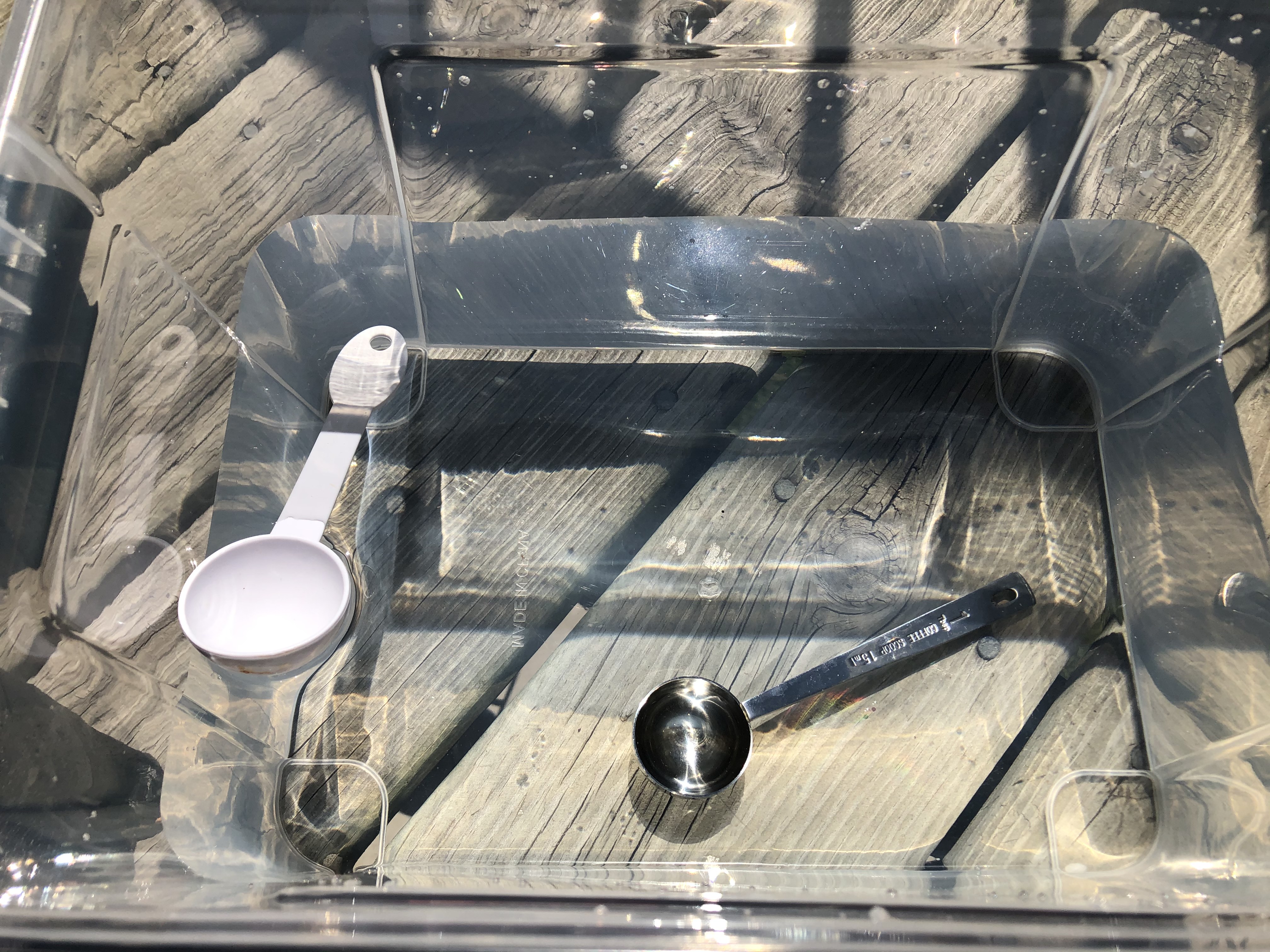
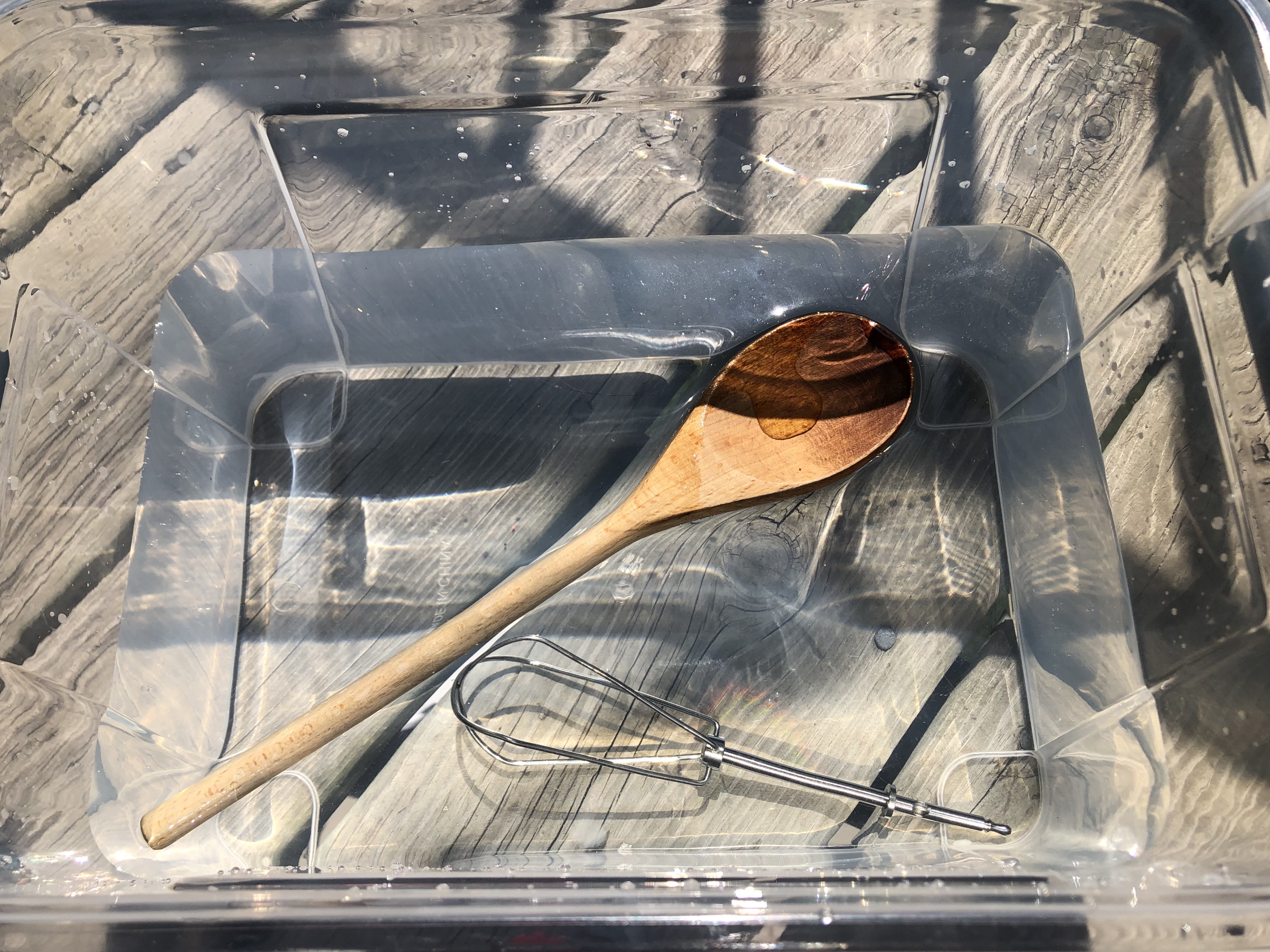
This week’s Brain Builder is a classic science experiment: Sink or Float. First, gather a variety items from from your house, looking for different sizes and materials like wood, metal, plastic, etc. I found some plastic animals of various sizes, a plastic and metal measuring spoon, a lid, a small jar, and a very random octopus tentacle and yo-yo from the junk drawer. You also need a container and water.
Choose one item at a time and take a moment to observe the object. What is it made of? Wood? Metal? Is it heavy? Light? Make a prediction about whether the object will sink or float. We learned that metal sinks quickly, while wood and plastic are likely to float.
Next, we predicted the yo-yo would float since it is made of plastic. Success! The yo-yo floated but we quickly noticed that the string did not.
Then we were excited to try the silly plastic octopus tentacle and the jar and lid. We predicted all 3 would float and they did. Until they sank. We realized that those objects floated until they filled with water and then they sank.
Lastly, we decided to check out the animals. We predicted the moose and the bear would sink because they were so big, and that the fish and the alligator would float because they were small and made of plastic. We were wrong! Which is part of being a scientist sometimes.
We decided to re-examine the animals since we predicted incorrectly. We finally realized that the bear and moose were hollow and full of air, while the fish and the alligator were made of a denser plastic.
This is a Brain Builder because it engages children in the process of scientific inquiry: observing, categorizing, and making predictions. You don’t even have to know why they sink or float, it’s meaningful just participating in the process.
*Bonus Brain Builder: We charted our predictions and outcomes, counted which items sank or float, and made a graph of our results.
Looking for another way to keep cool this summer? Give “Meltasaurus” a try! Meltasaurus is one of our most popular activities for younger children at the museum and now you can try them at home!
The setup: Grab some tiny plastic dinos, or LEGO’s, etc. Put the toys in some small containers (I had a bunch of mason jars hanging around), fill with water and freeze!
(If using glass, keep an eye on the containers and pull them out of the freezer once the water has just frozen. Water expands when it freezes so glass jars can break! If you want to prep this activities one or more days, before use plastic containers that can expand with your ice.)
When you’re ready to play: Grab some squirt bottles or droppers, and fill ’em up with water. I used a couple different kinds of bottles, including a small spray bottle and a pipette.
With my assistants, Ava and Beau (age 3), first we worked on getting the dinos out of the jars by squirting the water and melting the ice.
(For more experimentation, try filling the squirt bottles with different temperatures of water to see which frees the toys the fastest. For very little kids with short attention spans, or for bigger blocks of ice, use warm water.)
We used a plastic bin, but sitting in a small pool to do this activity would be a great way to keep cool on a hot summer’s day!
As more of the ice was removed from the jars, Ava and Beau used their fine motor skills to squeeze the bottles and free the dinosaurs. Every time they freed a dinosaur there was a great sense of accomplishment!
Why is this a Brain Builder? Activities like “meltasaurus” encourage children to use their fine motor skills, which helps with later tasks like zipping, tying shoes and writing. It supports social and emotional development by encouraging persistence, and feeling a sense of accomplishment. It’s also a first step at scientific inquiry by using observational skills: why does the water melt the ice, which dinosaurs are the same color, or what happens if we spray the water on ourselves or on the slide?
Many of us don’t love the idea of so many kids toys made out of plastic, but the wooden options are just so expensive. Plus it’s hard to justify investing in fancy toys that the kid may play with for a couple hours at most. The solution: DIY toys made out of cheap, recyclable or up-cycled material that are ok to rip, mangle, and then discard. Enter the DIY Toddler Stacking Tower!
Materials needed:
paper plate
hot glue gun
aluminum foil tube
paper towel tubes
scissors
construction paper (if desired)
Directions:
Glue/hot glue the construction paper to the aluminum foil tube (if desired).
Hot glue the aluminum foil tube to the paper plate (you’ll need a decent amount of glue).
Glue construction paper to the paper towel tubes and cut into rings.
Is your child tired of all their toys already? Try making your own game! All you need is a paper plate, strips of paper, glue, and either a marble or a piece of aluminum foil.
Glue each end of the strips of paper to the plate making a tunnel. Count to 10 to make sure the glue sticks! You can also make loops or walls.
When you’re all done making a maze of tunnels and decorating your game, try it out! Drop the marble of the aluminum foil ball and the plate and roll it around. Can you get your ball through each tunnel? Can you keep the ball on the plate without dropping it? Do you have to move fast or slow?
Not only will children feel proud creating their own fun game, but the mazes are also a first look at physics! Talk about a Brain Builder! How does the marble or the ball move? What happens when you tilt the plate too far? What happens if the ball gets stuck? How might you change your maze or make another one?
Brain Builders is part of MCM at Home. Follow us on social media for more tips, games, crafts, and ideas to learn through play at home.
Celebrate spring with a family walk. Enjoy the colors and sounds as they unfold with the increasingly warmer weather. As you walk challenge one another to a Number Hunt. As the saying goes, “The family that plays together, stays together.”
“I see one dog!”
Number Hunt can be played anywhere and it doesn’t require any additional supplies. To play, carefully look at your surroundings and find one of something. The first person to shout it out earns one point. For example, “I see one dog!” Next, look for two of something, such as “I see two brown birds at the feeder!” Now search for a quantity of three … and so on. At the end of the walk the person who has earned the most points gets to choose the next game or activity.
A sister game to Number Hunt is Numeral Hunt. The object of this game is to find the numerals starting with zero or one, your choice.
For more nature ideas, visit our friends at NatureNet.org.
Nature Mondays is part of MCM at Home. Follow us on social media for more tips, games, crafts, and ideas to learn through play at home.
Bored or stuck inside on a rainy day? You can create an indoor obstacle course in your home using items you already have! With help from my friend, Claire, (who insisted that Super Woman was the right person for the job) we used:
pillows as mud puddles to jump over
painters tape on the floor to zig zag and jump over
Colored balls to make a matching game
Leftover ribbon to make the “lasers”
A towel and a pool noodle as a lake and bridge
You can get creative with what you have at home and make it as challenging as you want!
See how Heather and Claire’s completed obstacle course!
Why is this activity a brain builder? With young children, the physical development and mental development are very much aligned. When kids are challenged to move in different ways, like balancing on a pool noodle or hopping over pillows, their brains create more synaptic connections that are useful not only for making them more physical coordinated but also improving their capacity for all kinds of learning. Playing pretend, like Claire does with Wonder Woman, is also great for learning empathy and creativity. Plus every parent knows that a kid who gets plenty of exercise is a kid who is much easier to deal with by the end of the day.
As of today, here in Wisconsin Governor Evers has declared that all non-essential businesses must close to limit the spread of COVID-19. For many of us that means even fewer options to entertain kids already getting a little sir-crazy after being at home for a week. And with so many families on reduced income, we need to make our resources stretch a littler further.
With that in mind, Heather, our early learning manager, put together a Brain Builders activity that you can do with absolutely NO extra supplies.
All you need is a pen/crayon/marker/eyeliner-pencil-you-don’t-like or any other writing implement, a piece of paper (the back of a target receipt will do), and a small selection of the toys your kid already has (how about the ones you already stepped over today?).
Heather previewed this activity for us with her cat, Gigi, but you can adapt it with the toys and skill-level of your human kids.
How To Assemble A Toy Scavenger Hunt
Grab 5-10 small toys and make a list of them.
Hide them around the room (around the house for older children),
Watch as they delight in finding their toys in unusual places
Match the toy with the list and make a check or an X when you’ve found the items.
Why is this a Brain Builder?
This simple game supports many facets of development, and you can tailor it to the developmental stage of your child. You might try counting how many toys have been found and how many are left to find working on number sense. Matching the toy with the list and making a mark promotes literacy. Children might have to cope with frustration, or may feel very proud when they’ve found a toy, contributing to emotional development. Children use observational skills and communication (both verbal and non-verbal) when working with you or with siblings.
Like this activity? Follow us online for more Brain Builders and other content designed by our education team experts for families during the COVID-19 shelter-in-place crisis.