The museum is working on two major improvements, which will require short-term and long-term closures.
Our Rooftop Ramble—which includes a sprawling rooftop flower and edibles garden, a combination chicken coop and homing pigeon cote, the acorn climber and “crow’s nest” lookout tower, and the indoor clubhouse which houses our education animals and science exploration activities—is one of the most iconic and beloved parts of Madison Children’s Museum. This spring we are kicking off a multi-stage project to refresh our rooftop spaces, bring in even more science and environmental education opportunities, and make visiting the roof more accessible for all our guests.
A view of Madison Children’s Museum’s rooftop ramble at the time the museum opened in 2010.
The whole rooftop floor is closed from April 1 through May 15, 2019. During that time, exhibits and facilities staff will complete Phase 1 of upgrades and additions. When the rooftop reopens there will be two new features installed. One is a windmill, which will engage wind power to lift water from a well below. The other is a large mechanical flower, whose movements will be powered by solar energy. You’ll also see changes to increase space inside the Clubhouse.
Our outdoor community spaces will be getting an upgrade to make them more accessible.
Phase 2 will be completed during our traditional closed weeks this fall, September 3 through 13. These changes will focus on making the rooftop more accessible for all users, including those with mobility devices.
Also, our Log Cabin will be closed until further notice. Though the Log Cabin itself is in fine shape, further erosion of the former parking structure out back, hastened by the extreme freeze/thaw cycles we experienced late this winter, necessitates closing down use of the back lot. This is not a surprise, as we were informed the back lot had an approximate ten-year lifespan when we acquired the building in 2005. And we are now well past that point. However, we know the Log Cabin is a beloved part of Madison Children’s Museum, and we are sorry to not be able to reopen it this spring, as we usually would.
The log cabin and garden, pictured here in 2013, will reopen in a few years.
So what’s next? The Log Cabin will be back within a few years. It will reopen as part of a major expansion project planned for the entirety of the back lot. This project is still in planning stages, so details are under wraps, but we can assure you that it will be worth the wait and that things are looking… Up.
We’re sorry for any inconvenience these closures cause. During the rooftop closure (through May 15), we are discounting regular admission to $7 for adults and children above the age of one and $6 for seniors.
In Downtown Madison, the planning of a new hotel can be fraught with controversy and lengthy negotiations between the city and private builders. The issues can take years to resolve before ground is broken: Will TIF money be used? Will the hotel be granted a variance to build more stories than code allows?
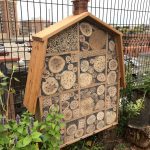
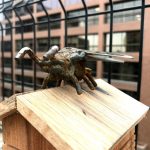
So it’s remarkable that Madison Children’s Museum has been able to quickly plan and build a hotel—using no public funding—delivering the project on time and on budget. Or it might be most remarkable that this Insect Hotel caters to those with six or more legs!
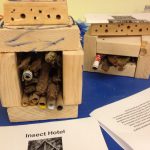
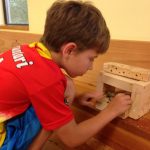
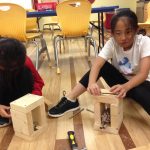
Insect hotels are a concept that is rapidly catching on in urban gardens and green spaces. Made out of natural materials, insect hotels have plenty of hidey-holes and little crevices where bugs can find a safe and warm shelter. Kids attending one of the museum’s summer camps created mini-insect hotels (pictured below) as one of their building projects.
Creating mini-insect hotels have been part of programs at the museum’s summer camps.
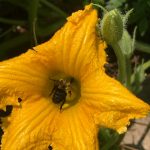
Insects are an important part of the ecosystem, even in an urban environment. They pollinate our urban gardens, get rid of food scraps—and some even control the populations of less welcome neighbors like mosquitos. But as Madison builds densely to maximize every inch of our urban landscape, we eliminate the safe places for our insect friends.
In particular, insect hotels benefit solitary bees. When thinking of bees, hives and honey generally come to mind, but the majority of the bee population is made up of individual bees. These solitary bees do not live in colonies or hives, but rather burrow in the ground or live in small holes in wood or other natural materials. Over 500 bee species live in Wisconsin, and many of these are threatened or endangered. Last year the endangered Rusty Patched Bumblebee was photographed by a pedestrian doing citizen science on Hamilton Street near the museum, so we know these bees live in our urban habitat. We just need to give them good housing to do so!
This fall Madison Children’s Museum added an Insect Hotel to our Pleasant T. Rowland Rooftop Ramble and will be introducing education programming about bees and other pollinators important to our ecosystem. The Rooftop Ramble is one of the most popular areas of the museum. It consists of a green rooftop with a four-season garden where kids can experience the great outdoors in the heart of downtown Madison. With the addition of the Insect Hotel, visitors will learn about the important contributions that insects make to our health, our food supply, and our environment.
The insect hotel “opens for arrivals” during Free Family Night on Wednesday, September 19, 2018. The theme of the night is Entomology Exploration. In addition to the grand opening and ribbon cutting of the insect hotel at 5:30 p.m., there will be Insect Art in the Art Studio from 6–7:30 p.m. and a special Learn about Insects program on the roof, also from 6–7:30 p.m.
Steve Zanoni is general manager of the Madison Concourse Hotel & Governor’s Club, down the block from the museum. We asked him how he felt about a new, competing hotel opening so close by. “Of course we always need to watch the competition,” said Zanoni. “And we will probably lose some of our customers who are bees; that’s unavoidable and unfortunate. But human visits to Madison are increasing—I’m confident we can stay in business. Badger fans or wedding guests staying for the weekend are more likely to schedule a day trip to the museum rather than try to cram themselves into the tiny Insect Hotel overnight, which, frankly, does not offer the quality amenities of our hotel.”
By Corinne Burgermeister Communications Specialist
This winter, Madison Children’s Museum is participating in Project FeederWatch, a national bird-watching program. The program, which started in the 1970s, is a winter-long survey of birds that visit feeders at backyards, nature centers, community areas, and, this year, at MCM’s Rooftop Ramble.
Participants count the birds seen at their feeders and send data to Project FeederWatch, which is run by the Cornell Lab of Ornithology. The data is then used to track broadscale movements of winter bird populations and long-term trends in bird distribution and abundance.
Alex Jeffers, MCM Discovery Guide
What can you tell us about yourself?
I have a BA in Sustainability from Baldwin Wallace University, which is an environmental science degree that incorporates classes in economics, political science, business, and sociology. The program focused on taking well-rounded approaches to environmental issues. Before coming to Madison, I worked as a Naturalist for Cleveland Metroparks in Ohio. There I led educational programs for schools, public hikes and classes, and coordinated citizen-science programs such as Project Feederwatch (among others).
Where did you first hear about Project FeederWatch?
I first heard about the project while working at a park district in Cleveland. It was there that I saw how projects such as this, and Cornell’s many other incredible citizen-science programs, helped to ignite people’s passion for birds and conservation in general. About a month ago, Rooftop Ramble Manager Julie King asked me if I had any experience with the program and I got excited just hearing its name again.
Why is this a good project for MCM to get involved in?
The world of birds is so different than our own that even when we get just small glimpses of it, such as at our bird feeders, it can immediately fill us with fascination and excitement! Creating a space and time for kids to dive into birds and embrace that fascination not only gets them jazzed about learning, but helps to build an ethic of respect for other living creatures that we share the museum with on a daily basis.
Can anybody participate in Project FeederWatch?
Of course! Anybody visiting the museum is welcome to come up during the program (Wednesdays and Thursdays from 2 – 3 p.m.) to learn more about birds, citizen-science, and how we can create a thriving space for people and wildlife right in downtown Madison! For those who aren’t able to make it to the museum, or who would like to get more involved, anyone can register their home-feeders and participate in their own backyards.
What can kids learn by participating in Project FeederWatch?
They’ll learn to tell different bird species apart from each other, why some birds come to our roof (and even to specific feeders) and others do not, why it is important to create habitat and food sources for birds in cities, and all the ways that people can contribute to research and habitat restoration all over the country.
What can kids and families expect to do during this drop-in program?
Participants will join me in watching the bird feeders set up on the rooftop and counting how many of each species visit the feeders. They will also be able to ask questions about birds and even check out the homing pigeons and chickens that call our rooftop home.
Typically, what birds do we see on our rooftop? Will that change with winter weather?
The weather definitely has an effect on the types of birds here in Madison, so Project FeederWatch specifically focuses on birds that visit feeders during the winter, when birds have a harder time finding other food sources. The birds we have seen so far eating at our feeders are American Goldfinches, House Sparrows, and Black Capped-Chickadees. As the winter continues and more birds begin to find our feeders, I expect that we will have new species frequenting our rooftop.
What types of food do we have in our bird feeders?
Since it becomes hard to stay warm when the temperatures drop, it is important to have high-fat foods at feeders during the winter. We have peanuts, sunflower seeds, suet, and thistle (a favorite of Goldfinches year-round).
What sort of data or information are we tracking? And how?
Project FeederWatch tracks the diversity of birds using feeders and the numbers of birds within each species. By counting every bird that comes to the feeder within a certain time frame, we can begin to understand which birds are more dependent on these man-made food sources.
American Goldfinch. Photo: Audobon
How will Cornell and other scientists use this data?
Cornell compiles Project FeederWatch data from all over the country to paint a comprehensive picture of how bird feeders are affecting the populations of certain species of birds compared to others. This can give important insights into how we can best create habitat and food sources for the largest number of species in our cities.
What are you most excited about or hoping to learn?
Personally, I am excited to get a better understanding of how our rooftop garden is benefiting birds in Madison. It is so important to create pockets of habitat, such as our Rooftop Ramble, in cities that are dominated by concrete and steel. This will help us better guide our efforts at MCM in adding to Madison’s bird populations.
Also, being an avid bird-watcher myself, I am beyond excited to spark excitement and fascination for birds (and all wildlife) in the hearts of the kids visiting MCM. Hopefully this will contribute to an ethic of respect for all living things in the coming generations.
Project FeederWatch occurs on the Rooftop Ramble Wednesdays and Thursdays from 2 – 3 p.m. through early April. Alex is also happy to spend time watching the feeders and talking about birds with visitors throughout the day. All rooftop staff are very knowledgeable about the wildlife we have at the museum and are eager to speak with visitors!

 The museum is working on two major improvements, which will require short-term and long-term closures.