Open Wed–Sun 9 am–4 pm • Free Thur nights, 4 pm–8 pm • Get tickets

Open Wed–Sun 9 am–4 pm • Free Thur nights, 4 pm–8 pm • Get tickets

Visit the Museum 608.256.6445 Find Us

Tag Archive: rooftop garden

  1. Spring closures will lead to bigger things

    Leave a Comment

    RooftopClosure-FacebookThe museum is working on two major improvements, which will require short-term and long-term closures.

    Our Rooftop Ramble—which includes a sprawling rooftop flower and edibles garden, a combination chicken coop and homing pigeon cote, the acorn climber and “crow’s nest” lookout tower, and the indoor clubhouse which houses our education animals and science exploration activities—is one of the most iconic and beloved parts of Madison Children’s Museum. This spring we are kicking off a multi-stage project to refresh our rooftop spaces, bring in even more science and environmental education opportunities, and make visiting the roof more accessible for all our guests.

    8905054184_c76431abb8_k.jpg

    A view of Madison Children’s Museum’s rooftop ramble at the time the museum opened in 2010.

    The whole rooftop floor is closed from April 1 through May 15, 2019. During that time, exhibits and facilities staff will complete Phase 1 of upgrades and additions. When the rooftop reopens there will be two new features installed. One is a windmill, which will engage wind power to lift water from a well below. The other is a large mechanical flower, whose movements will be powered by solar energy. You’ll also see changes to increase space inside the Clubhouse.

    43561931405_faa0bfe17b_k.jpg

    Our outdoor community spaces will be getting an upgrade to make them more accessible.

    Phase 2 will be completed during our traditional closed weeks this fall, September 3 through 13. These changes will focus on making the rooftop more accessible for all users, including those with mobility devices.

    Also, our Log Cabin will be closed until further notice. Though the Log Cabin itself is in fine shape, further erosion of the former parking structure out back, hastened by the extreme freeze/thaw cycles we experienced late this winter, necessitates closing down use of the back lot. This is not a surprise, as we were informed the back lot had an approximate ten-year lifespan when we acquired the building in 2005. And we are now well past that point. However, we know the Log Cabin is a beloved part of Madison Children’s Museum, and we are sorry to not be able to reopen it this spring, as we usually would.

    8904344497_f9a9f38d36_k.jpg

    The log cabin and garden, pictured here in 2013, will reopen in a few years.

    So what’s next? The Log Cabin will be back within a few years. It will reopen as part of a major expansion project planned for the entirety of the back lot. This project is still in planning stages, so details are under wraps, but we can assure you that it will be worth the wait and that things are looking… Up.

    We’re sorry for any inconvenience these closures cause. During the rooftop closure (through May 15), we are discounting regular admission to $7 for adults and children above the age of one and $6 for seniors.

    Watch this space, follow our Facebook page, and subscribe to our email newsletter for upcoming news and project details.
  2. New Hotel Opens on Museum Roof — For Insects!

    Leave a Comment

    In Downtown Madison, the planning of a new hotel can be fraught with controversy and lengthy negotiations between the city and private builders. The issues can take years to resolve before ground is broken: Will TIF money be used? Will the hotel be granted a variance to build more stories than code allows?

    So it’s remarkable that Madison Children’s Museum has been able to quickly plan and build a hotel—using no public funding—delivering the project on time and on budget. Or it might be most remarkable that this Insect Hotel caters to those with six or more legs!

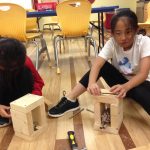
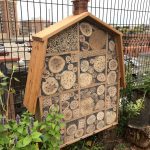
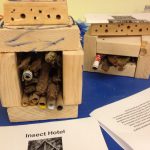
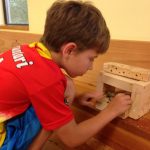
    Insect hotels are a concept that is rapidly catching on in urban gardens and green spaces. Made out of natural materials, insect hotels have plenty of hidey-holes and little crevices where bugs can find a safe and warm shelter. Kids attending one of the museum’s summer camps created mini-insect hotels (pictured below) as one of their building projects.


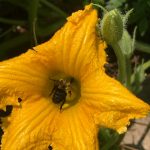
    Insects are an important part of the ecosystem, even in an urban environment. They pollinate our urban gardens, get rid of food scraps—and some even control the populations of less welcome neighbors like mosquitos. But as Madison builds densely to maximize every inch of our urban landscape, we eliminate the safe places for our insect friends.

    In particular, insect hotels benefit solitary bees. When thinking of bees, hives and honey generally come to mind, but the majority of the bee population is made up of individual bees. These solitary bees do not live in colonies or hives, but rather burrow in the ground or live in small holes in wood or other natural materials. Over 500 bee species live in Wisconsin, and many of these are threatened or endangered. Last year the endangered Rusty Patched Bumblebee was photographed by a pedestrian doing citizen science on Hamilton Street near the museum, so we know these bees live in our urban habitat. We just need to give them good housing to do so!

    This fall Madison Children’s Museum added an Insect Hotel to our Pleasant T. Rowland Rooftop Ramble and will be introducing education programming about bees and other pollinators important to our ecosystem. The Rooftop Ramble is one of the most popular areas of the museum. It consists of a green rooftop with a four-season garden where kids can experience the great outdoors in the heart of downtown Madison. With the addition of the Insect Hotel, visitors will learn about the important contributions that insects make to our health, our food supply, and our environment.

    The insect hotel “opens for arrivals” during Free Family Night on Wednesday, September 19, 2018. The theme of the night is Entomology Exploration. In addition to the grand opening and ribbon cutting of the insect hotel at 5:30 p.m., there will be Insect Art in the Art Studio from 6–7:30 p.m. and a special Learn about Insects program on the roof, also from 6–7:30 p.m.

    Steve Zanoni is general manager of the Madison Concourse Hotel & Governor’s Club, down the block from the museum.  We asked him how he felt about a new, competing hotel opening so close by. “Of course we always need to watch the competition,” said Zanoni. “And we will probably lose some of our customers who are bees; that’s unavoidable and unfortunate. But human visits to Madison are increasing—I’m confident we can stay in business. Badger fans or wedding guests staying for the weekend are more likely to schedule a day trip to the museum rather than try to cram themselves into the tiny Insect Hotel overnight, which, frankly, does not offer the quality amenities of our hotel.”

    The new Insect Hotel and the accompanying education programs are made possible by the generous support of American Transmission Company, with additional support from the Dane County Environmental Council.

    ATC-color

  3. Edible Insects: From Fish Bait to Protein Shakes

    Leave a Comment

    For many in the Western culture, just the thought of eating insects might make someone feel sick. But we would like you to reconsider. Insects have proven to be an incredibly valuable source of protein and minerals, and when added to an everyday recipe or dessert, they can be downright delicious.

    Want to give it a try? Join us for Edible Insects, a monthly program where we experiment with different recipes, to introduce children and their families to this sustainable practice. Or, try one of our favorites, the Wax Worm Protein Shake at home.

    RECIPE: Wax Worm Protein Shakes
    Serves two

    INGREDIENTS

    1 cup milk of choice
    1 large banana (fresh or frozen)
    1 cup frozen fruit of choice
    1/4 cup roasted wax worms
    Ice cubes (optional)

    DIRECTIONS

    Measure one cup of milk (we used Oat Milk) and pour into blender. Add  cooked wax worms and pulse to blend. Slice banana into bite-sized pieces and add to blender, along with any other fruit you desire – we used a mix of frozen strawberries, mangoes and blueberries. Blend until the mixture reaches your desired consistency. For additional protein, add peanut butter, chia or flax seeds.

    TO ROAST WAX WORMS

    Collect wax worms (readily found where live fishing bait is sold) and freeze for at least four hours. Preheat oven to 300 degrees. Once frozen, use a colander to separate worms from the pieces of wood shavings used for packaging. Place frozen worms on a parchment-lined baking sheet and bake in the oven for 20 minutes. Shake tray at 10 minutes to ensure worms are cooked evenly. Continue to bake until worms turn a golden brown color and have a nutty scent – they should smell like pistachios. Baking ensures that bacteria will be killed. Let worms cool before using in any recipes.

    To purchase edible insects, visit thailandunique.com 

    Recipe by Alissa Anderson, MCM Program Assistant.
    Corinne Burgermeister contributed to this post.

© 2026 Madison Children's Museum | Privacy Policy