Peter and Laura Chidyllo moved to Wisconsin with their two children during the height of the pandemic. After a year of social distancing, Laura and Pete were eager to visit MCM—to provide creative play opportunities for their children and as a way for them to learn about their new home in the Midwest.
“Having moved amid the pandemic, the museum was the first place that we felt safe and comfortable inside. The kids were also able to learn about their new state in the Coops to Cathedral exhibit by playing with cows on the farm!” shared Peter.
In appreciation, they made a generous gift and became Wonder Makers.
The Chidyllo’s attended the opening celebration of the Wonderground in fall of 2022. The space captivated the whole family. Laura appreciates, in particular, the chances for child-driven play planted throughout the Wonderground.
“The Wonderground gives the kids an outlet to use their imagination, especially at the cabin. Our kids don’t have to follow anybody’s rules or play the right way. They can just play and pioneer for the afternoon. It’s a whole encompassing experience for our kids to learn and play using their imagination.”
Child-driven play empowers children to take the lead in their learning as they explore the museum at their own pace and in their own way. Research shows that allowing children to play in this way can help build a child’s self-confidence, self-direction, and social development.
The museum’s historic 1830s cabin is located on a small knoll overlooking the Wonderground.
The Chidyllo’s have had a hand in recent child-driven playful moments: They became major sponsors of winter programming.
Peter and Laura have a strong history of giving back to their community. “We like to support organizations that focus on children, as well as eliminating food insecurity. We appreciate that MCM does both through access to safe, imaginative play and access to food within Little John’s Lunchbox.”
Madison Children’s Museum is grateful for that support, which helps provide opportunities for joyful play to approximately 200,000 visitors each year, nearly 50,000 of whom visit for free or at a reduced cost through MCM’s six Access for Everyone programs.
A museum visitor makes delicious woodchip soup outside the cabin in the Wonderground.
Learn more about becoming a Wonder Maker and supporting a wonder-ful cause with wonder-ous benefits. Support MCM today!
October is a great time to try out some classic science experiments with a Halloween twist! You can make some Boo Bombs out of items in your kitchen.
Materials needed:
zippered plastic bags
white vinegar
corn starch
toilet paper (it’s a precious commodity but you only need a few squares)
baking soda
food coloring (optional)
If you’d like, you can decorate your bags first, with pumpkins, ghosts, witches, etc. If you have a curious child at home, plan to make at least a few bags as they will likely want to do this more than once.
Put about 1 tablespoon of baking soda in a square of toilet paper, fold it up into a square and set aside.
Fill each baggie with 1 tablespoon of corn starch and about 1 cup of vinegar. Mix it around a bit to make sure the corn starch is dissolved. Add a few drops of food coloring if you’d like too.
Here comes the tricky part! Help you child open the bag just enough to drop in the baking soda (tp and all). Seal the bag quickly and throw it! Watch as the baking soda mixes with the vinegar to inflate the bag until it pops. BOO!
Even very young children love to do this science experiment and will want to do it over and over again! As you are putting the bag together you can talk about the various components. How does the vinegar smell? Do you like the smell? What do we use baking soda for? Does it look like other kitchen supplies? Do yo have any idea what will happen when we mix these together? (Young children often think it will change colors.)
You can explain that the vinegar and baking soda will mix together to form bubbles full of air or gas to fill the baggie. After you have done the experiment ask them to tell you what happened, or what will happen if you do the experiment again.
Young children may not understand the concepts of carbon dioxide or chemical reactions, but they’ve used their senses to make observations, learned about making predictions, and conducted an experiment. It’s a great start to science learning and inquiry!
Looking for another way to keep cool this summer? Give “Meltasaurus” a try! Meltasaurus is one of our most popular activities for younger children at the museum and now you can try them at home!
The setup: Grab some tiny plastic dinos, or LEGO’s, etc. Put the toys in some small containers (I had a bunch of mason jars hanging around), fill with water and freeze!
(If using glass, keep an eye on the containers and pull them out of the freezer once the water has just frozen. Water expands when it freezes so glass jars can break! If you want to prep this activities one or more days, before use plastic containers that can expand with your ice.)
When you’re ready to play: Grab some squirt bottles or droppers, and fill ’em up with water. I used a couple different kinds of bottles, including a small spray bottle and a pipette.
With my assistants, Ava and Beau (age 3), first we worked on getting the dinos out of the jars by squirting the water and melting the ice.
(For more experimentation, try filling the squirt bottles with different temperatures of water to see which frees the toys the fastest. For very little kids with short attention spans, or for bigger blocks of ice, use warm water.)
We used a plastic bin, but sitting in a small pool to do this activity would be a great way to keep cool on a hot summer’s day!
As more of the ice was removed from the jars, Ava and Beau used their fine motor skills to squeeze the bottles and free the dinosaurs. Every time they freed a dinosaur there was a great sense of accomplishment!
Why is this a Brain Builder? Activities like “meltasaurus” encourage children to use their fine motor skills, which helps with later tasks like zipping, tying shoes and writing. It supports social and emotional development by encouraging persistence, and feeling a sense of accomplishment. It’s also a first step at scientific inquiry by using observational skills: why does the water melt the ice, which dinosaurs are the same color, or what happens if we spray the water on ourselves or on the slide?
Many of us don’t love the idea of so many kids toys made out of plastic, but the wooden options are just so expensive. Plus it’s hard to justify investing in fancy toys that the kid may play with for a couple hours at most. The solution: DIY toys made out of cheap, recyclable or up-cycled material that are ok to rip, mangle, and then discard. Enter the DIY Toddler Stacking Tower!
Materials needed:
paper plate
hot glue gun
aluminum foil tube
paper towel tubes
scissors
construction paper (if desired)
Directions:
Glue/hot glue the construction paper to the aluminum foil tube (if desired).
Hot glue the aluminum foil tube to the paper plate (you’ll need a decent amount of glue).
Glue construction paper to the paper towel tubes and cut into rings.
In honor of both Madison Resturant Week (this year in a to-go format!) and our Pie-in-the-Sky diner, which is a favorite exhibit at Madison Children’s Museum for many of our visitors, we present a special restaurant theme for Brain Builders!
Miss going to your favorite restaurant? Try playing restaurant at home! Children love to role play, and they also love to help with real household tasks.
Can they help with setting part of table? Can they take drink orders? Or circle a food choice on a pretend menu?
At the Pie-in-the-Sky diner in the museum, kids love to make pizzas and pies. Our “ingredients” are made by an artist out of up-cycled sweaters, but you can make your own play food out of old clothes or other things you have around the house like cardboard for crusts and shredded paper for cheese. Or go a step further and let them actually help make snacks. In a recent Exploration Stations, Cheryl had some great ideas on how to get little kids cooking and Joyce shared even more ideas for cooking on our blog!
Dinner can be a hectic and busy time. Part of dining in a restaurant is also practicing patience, using an indoor voice, and entertaining yourself at the table while waiting for your meal. Simply playing “restaurant” can encourage those behaviors.
There are also quiet games you can play together (or solo) at the table: a short crossword puzzle, hangman, the dot game, mazes, drawing games, etc.
From planning a menu, to creating food, to waiting to be served, playing restaurant is a Brain Builder!
Brain Builders is part of MCM at Home. Follow us on social media for more tips, games, crafts, and ideas to learn through play at home.
We’d planned to launch the MCM Roadshow this summer to celebrate our 40th anniversary, coming this fall. The pandemic has forced Madison Children’s Museum to revise those original plans, which involved bringing hands-on exhibits and shoulder-to-shoulder play to neighborhoods across the area.
The need for active, outdoor play hasn’t diminished, even if the opportunities have. It is more important than ever for the museum to support public health as families struggle to navigate online learning, social isolation, financial stress, limited access to outdoor play, and mental health challenges.
So we’ve reimagined the MCM Roadshow, and the first project under the new plan, Sidewalk Surprises, rolls out at the end of May on streets and sidewalks all over town and beyond.
Culturally diverse and artistic temporary hopscotch courses, mazes, and labyrinths will encourage active play while reinforcing early math concepts. Strategically placed, sidewalk solo-games will encourage walking and fluid movement through space—rather than gathering—and will reinforce social distancing while creating joy.
This is especially important, since children’s most beloved places in the community are currently closed—the museum, playgrounds, the zoo, and parks.
Based on the book Hopscotch Around the World (Mary Lankford), these hopscotch challenges will be infused with math concepts, supporting math learning standards for children (grades 4k to 2nd grade), while also helping children develop spatial awareness, small and gross motor skills, and dexterity. The challenges will be spread across the city, with a special focus on economically disadvantaged neighborhoods.
We’ll create over thirty different kinds of sidewalk games, including multicultural games, games for disabled community members, and games for younger children. Each game will be accompanied by educational content or stories about the origins of the game, as well as expanded learning opportunities to explore hopscotch and game-inspired math concepts. Materials will be available on the museum’s website and in local neighborhood centers.
MCM is partnering with the City of Madison (Arts Commission, Police Department, Mayor’s Office, Pedestrian & Bike Safety Program, and other departments), and collaborating with surrounding municipalities, neighborhood centers, neighborhood associations, and local artists.
Museum staff will work within the City of Madison’s social distancing guidelines to place sidewalk games within their own neighborhoods. Games will not be placed on already crowded bike paths or gathering places, but on less heavily used sidewalks or walking corridors. Madison Arts Commission will help MCM secure all necessary city permits, and find and hire additional artists from underserved neighborhoods to create games near where the artists live. MCM staff will contact neighborhood centers and neighborhood associations to let them know of the activities and hear feedback to make sure our work is welcome.
The project will use water-based chalks, both spray and paint-on—all temporary and approved by city ordinances. Every neighborhood will include one secret hopscotch game, which will only emerge when it rains, encouraging walking in all kinds of weather to find the secret game. MCM will provide clues to each neighborhood to help find their secret hopscotch course.
Each neighborhood/neighborhood center will also receive a large collection of sidewalk chalk, stories, and sidewalk game examples, to encourage children to create their own sidewalk games. During the school year, chalk will be distributed in conjunction with MMSD and the Healthy Kids Collaborative lunch pick up locations, and to other community partners.
And lastly, MCM will host an online gallery where everyone will be encouraged to share their sidewalk art creations. These artful challenges, spread throughout the city, show what the museum does best—creating joyful, active, play-based learning experiences for our community’s children that reinforce critical educational concepts.
Watch for the next phase of MCM Roadshow starting this June: We’ll be distributing Discovery Packs to help facilitate creative learning at home.
Sidewalk Surprises is a Madison Children’s Museum ROADSHOW PROJECT, a temporary public art project presented in collaboration with the City of Madison. These surprises are joyfully made possible by support from Madison Community Foundation, Alliant Energy Foundation, American Family Insurance Dreams Foundation, Endres Mfg. Co. Foundation, and US Bank Foundation. This project was also supported by Dane Arts, with additional funding from American Transmission Company, Madison Arts Commission, Madison South Rotary, and Veridian Homes.
Sometimes when young children are overwhelmed with emotion they need a visual cue to help them calm down. A mind jar can serve as both a visual cue as well as a timer to assist children when feeling overwhelmed.
Supplies needed:
Clear plastic bottle (sturdier than a disposable water bottle)
Small funnel
Corn syrup
Warm water
Dish Soap
Food coloring
Glitter
Beads/gems (if desired)
Hot glue gun
Directions:
Rinse and clean a clear plastic bottle.
Fill 1/3 of the bottle with corn syrup.
In a cup add just a couple drops of food coloring and top with warm water until you reach the desired color.
Add water to the jar, leaving some room for glitter and beads (if desired).
Add 3-5 drops of dish soap.
Using a funnel add 1-2 teaspoons of glitter.
Seal and shake to test. Add glitter/water/food coloring as desired. (It will take some time for all the ingredients to blend together.)
When you’ve reached the desired result, open the lid and place a ring of hot glue around the outside and seal the jar tightly. For extra protection, place another ring of hot glue around the outside of the sealed lid.
Shake and breathe!
Brain Builders is part of MCM at Home. Follow us on social media for more tips, games, crafts, and ideas to learn through play at home.
The first hint of fall is in the air, and for many families, schedules are shifting back to routines that include work, school, and often an array of extracurricular activities designed to strengthen kids’ bodies and minds.
With all this structure, it’s also critical to make time for unstructured play.
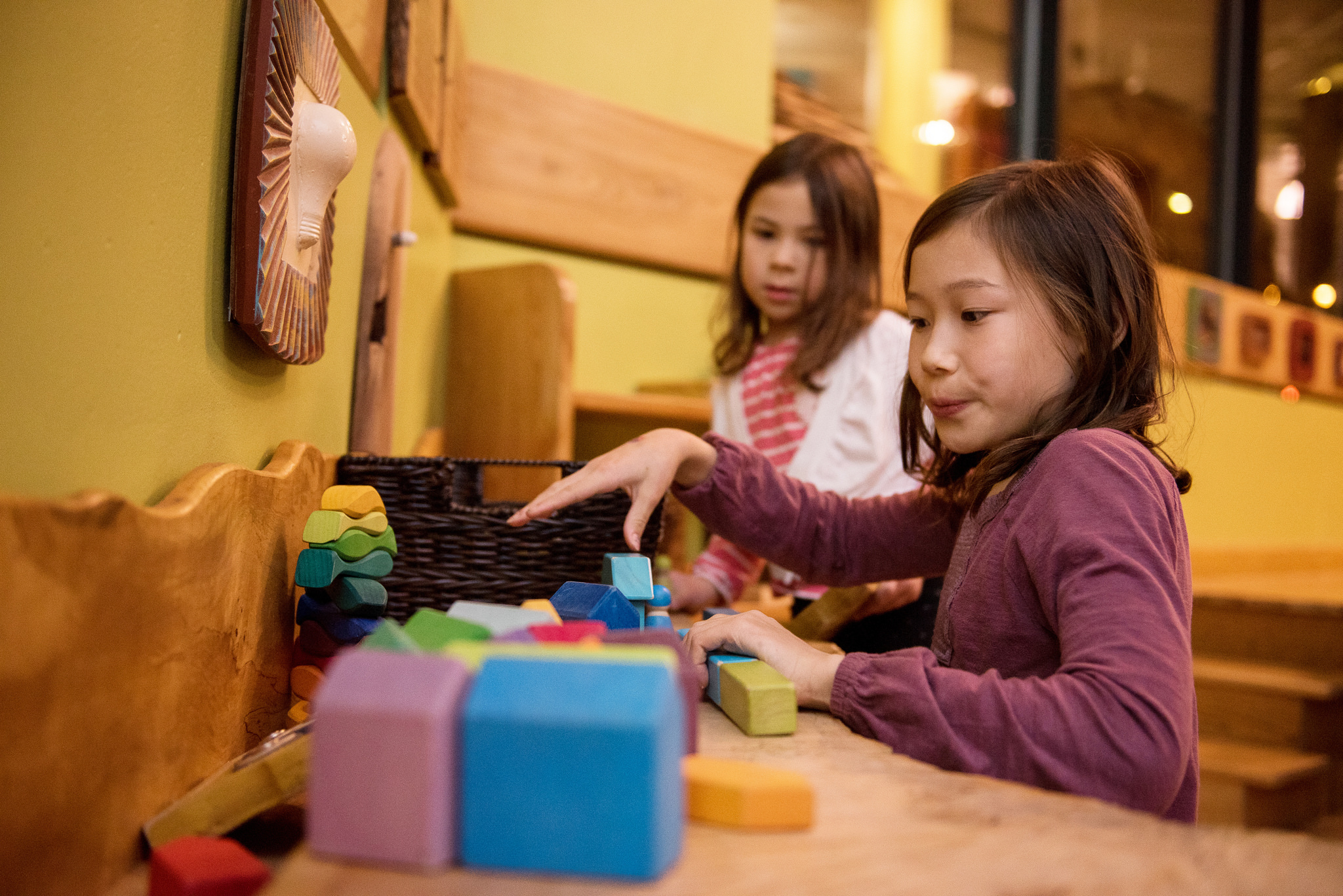
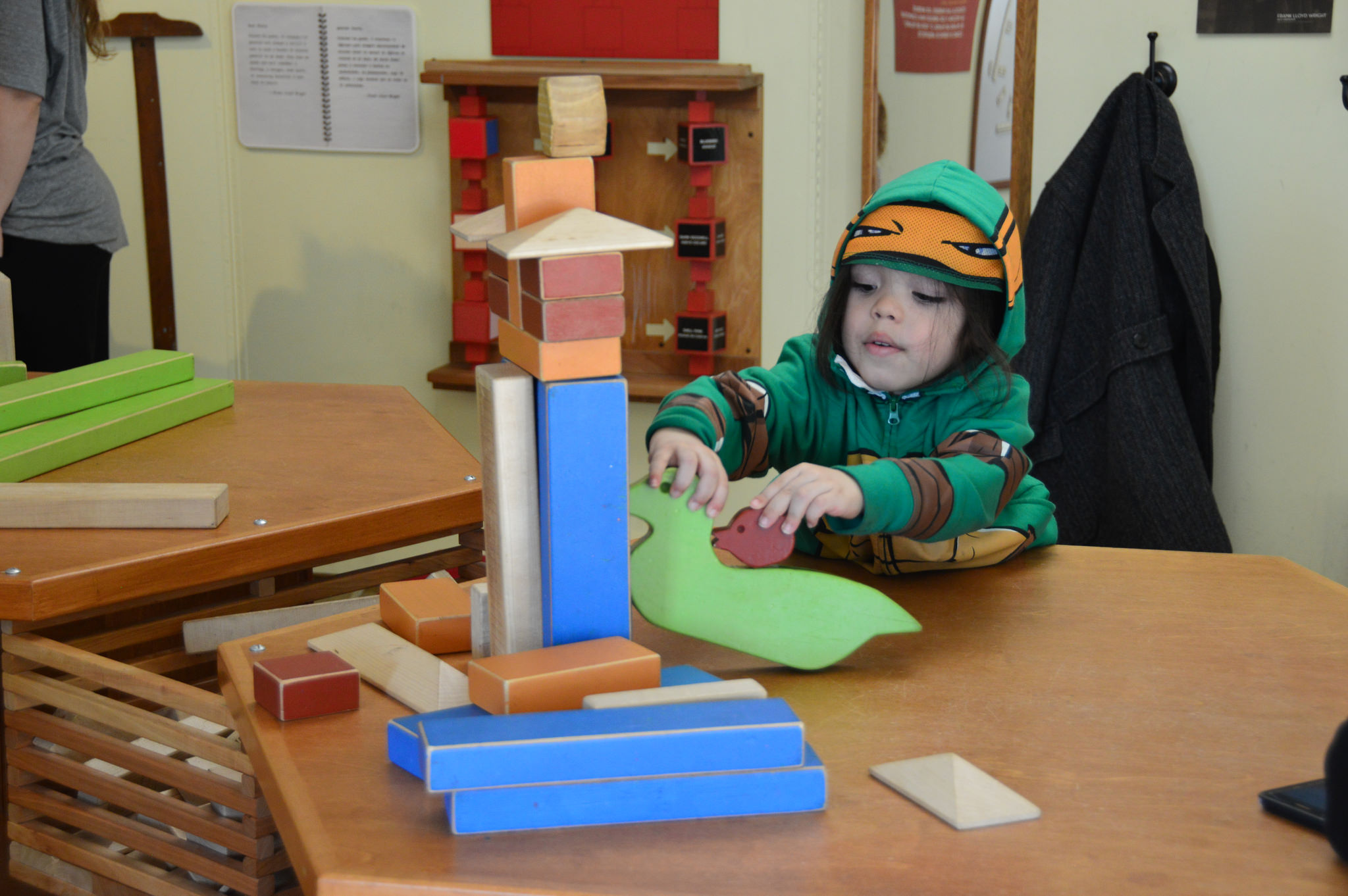
Kids benefit when they self-guide their play, using toys and spaces that are open-ended, like the environments created by Madison Children’s Museum exhibits. Here, two girls play with brightly colored blocks in the museum’s Wildernest exhibit.
Experts agree, children get an extraordinary number of benefits from unstructured play—playtime that they define, rather than letting a coach, teacher, game designer, or product marketer tell them how to do it. Play promotes creativity, builds motor skills, and helps kids work through their fears and stress. There is a strong correlation between unstructured play and executive function skills. And executive function skills are what kids need to succeed in school (I will listen to the teacher, even though I can see other kids playing out the window), as they grow (I will obey my curfew, even though my friends still want to hang out), and as adults (I will make myself nutritious food, even though I could eat Apple Jacks and Doritos for three meals a day and no one would stop me.)
Yet so much of what fills our kids’ hours, particularly during the school year, is highly structured. Kids go from school days where recess is often squeezed out to make way for more instruction time and then participate in a parade of beneficial but highly structured activities: music lessons, sports, clubs, scouting, etc.
A recent New York Times article, titled “Let Kids Play” explains it well:
“We’re in a climate where parents are feeling like they need to schedule every minute of structured time, and 30 percent of kindergartens offer no recess,” said Dr. Michael Yogman, chairman of the A.A.P. committee on psychosocial aspects of child family health and the lead author of the statement. To some, he said, “play is seen as irrelevant and old-fashioned.”
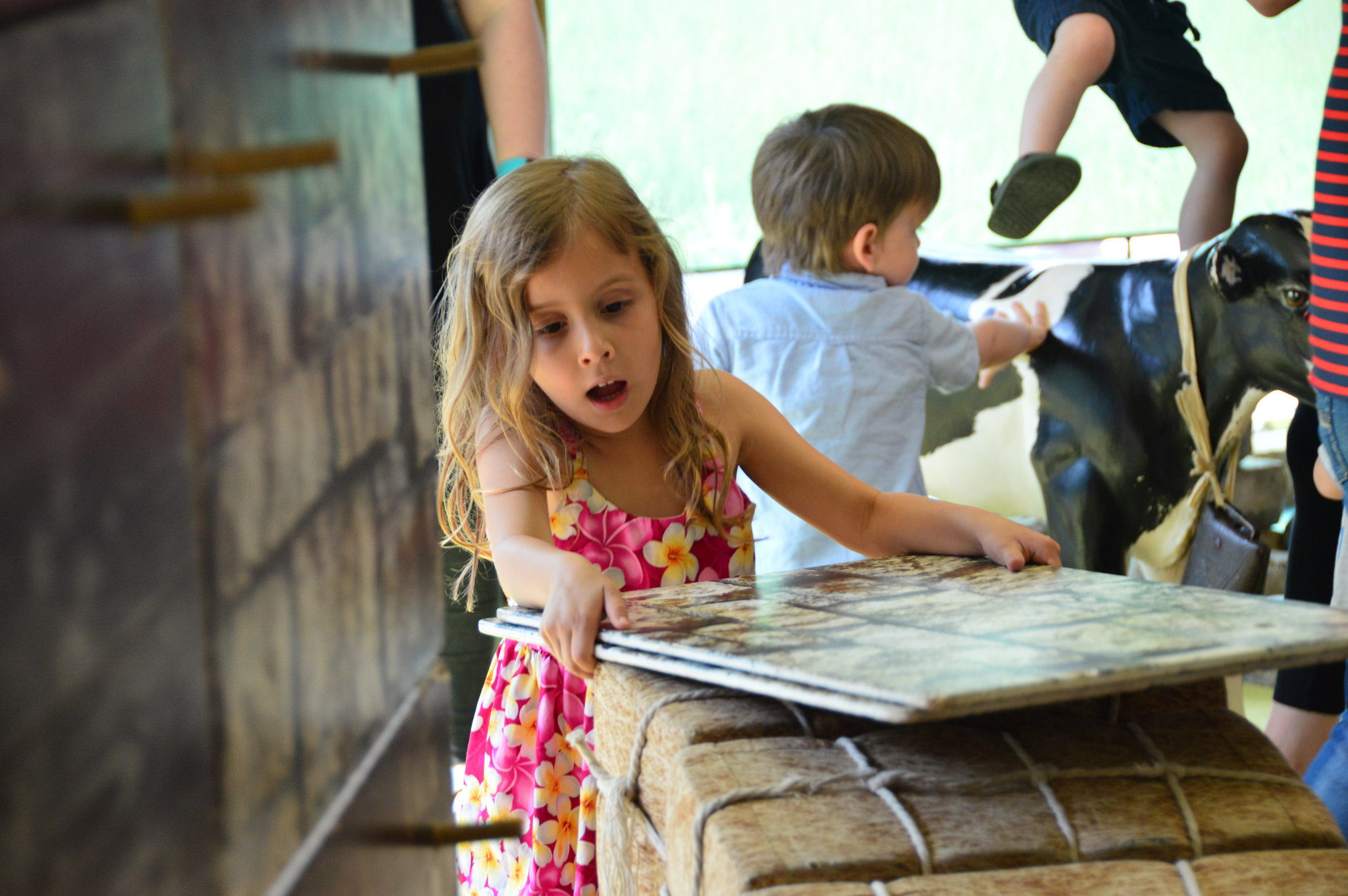
Madison Children’s Museum is built with unstructured play in mind. Every one of our exhibit areas—from the Wildernestlittle-kids area, through Coops to Cathedrals on the second floor, and up on the rooftop—offers kids an environment that inspires play without telling them how to go about it. For example, there are building blocks in the farm section of Coops to Cathedrals, but no guidelines as to what should be built. The result is that on any day you could find kids constructing a block house for the model calf, a wall across half the exhibit, a long parade of blocks winding across the floor, or tall skyscrapers reshaping the view out the window. Similarly, the climbing equipment on the roof is sometimes a unicorn-populated castle in a forest, and other times a rocket ship, or a cage to contain a dragon—depending on the imagination of the children who happen upon it.
A child plays with evocatively shaped blocks in the museum’s Coops to Cathedrals exhibit.
None of this is an accident. In the grand Madison tradition of “think locally” our exhibits aren’t purchased piecemeal from elsewhere; they’re built by local artisans and artists on staff, in consultation with our staff and board experts on child development. We recognize the benefits of unstructured play and build our exhibits accordingly, providing tools and toys that can be used a myriad of open-ended ways, and with a minimum of instruction by staff or signs.
Sometimes it takes kids, but more often their parents, a little while to break out of the mindset of structured play. Our discovery guides, who help assist and tidy exhibit spaces during the day, regularly get asked how a particular portion of an exhibit “is supposed to work.” The answer is, generally, that it works, however, the child thinks it should work.
Deb, our CEO, often talks about a study where children were given an unusual “novel” toy. The children, given no information as to what it did, found many different ways to play with it. The children who had an adult demonstrate a few, specific ways to operate the toy only played with it in that limited manner. Madison Children’s Museum takes these lessons to heart; the lack of directional signs in our exhibits is deliberate, to enable invention and creativity, and encourage parents to follow the lead of their children.
A girl assembles large panels in the farmhouse section of Coops to Cathedrals. What she creates is up to her imagination.
As your family returns to the rhythms of the school year, make unstructured playtime a priority. Provide your kids with toys that don’t suggest a narrative (generic, rather than established characters), let them play in a park with or without play equipment, and plan a visit to Madison Children’s Museum and let them lead the way on where and how they want to play.
Way back when I was entering the job market I interviewed for a company that designed and tested the promotional items, or prizes, included in cereal boxes, snack foods, and fast food kid’s meals. I found the research behind what the company was doing extremely fascinating. It was a thrill to meet the people who designed the prizes I would see on TV and always hoped to find in the bottom of my caramel corn box.
The premise behind the company’s prize model was simple: four different versions of a toy with each version coming in three colors. Think about it, that’s a total of 12 prizes! “Collect ’em all!” This company was clearly in tune with children. Kids begin collecting things around five to six years old. From rocks, stickers, and stuffed animals to prizes in cereal boxes, anything and everything they find interesting is fair game. Oftentimes they are most intrigued by the unique differences that set individual pieces apart. To a child, the variety is just as important as the amount.
I was reminded of the interview when cleaning out my closet. I came across a shoe box that had been pushed to the back corner. The box contained my son’s rock collection. I can clearly remember how they would carefully scan the stones on each visit to one of Madison’s beaches or how they would examine our favorite walking path in the neighborhood woods. They were always on the lookout for that perfect specimen. Once home it was safely stored in the repurposed shoe box. From time to time they would take out the box and sort their treasures. Sometimes by color, sometimes by size, sometimes by shininess, and sometimes by where they were found. The more they learned about rocks, the more they applied relevant scientific concepts to their sorting process.
Research tells us that children strengthen their analytical skills as they collect stuff. From rocks, stickers, and stuffed animals to prizes in cereal boxes, as they build up and sort through their collections they tap into the same observational skills they practice when in school. These skills apply to math, science, reading, and can connect to culture and history depending on the collection. As children continue to collect they continue to grow as learners, and express themselves though their interests to develop and strengthen a part of their identity. And of course, going on a treasure hunt for that perfect specimen can be an adventure for the whole family.
This week we’re pleased participate in the Week of the Young Child. Organized by the National Association for the Education of Young Children, the Week of the Young Child is an annual celebration of early learning, young children, their families, and teachers—and that includes the expert staff at Madison Children’s Museum! They make sure that our exhibits and programs meet the highest standards for educational and developmentally appropriate play and learning.
Follow our blog this week to learn about the key themes that are being highlighted during the 2018 Week of the Young Child, and how you can take advantage of our resources and programs for your early learner.
Music Monday
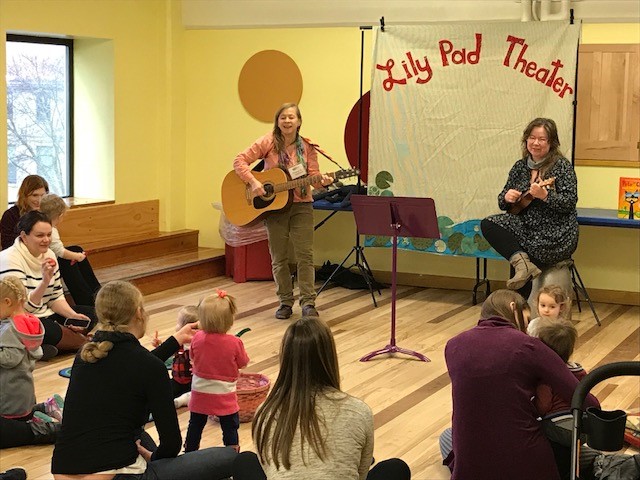
Listening to and playing music is a joyful act of childhood and connects us to our family and our community. There is a reason that singing to children has become an essential part of early learning curriculum. Children learn language and concepts particularly well through singing because music stretches out the sounds, making it easier for them to detect words and their meanings. Music also helps kids with literacy and math skills as they learn rhythm and beats.
At Madison Children’s Museum, we learn through music during weekly programs like Music with Junebug and Lily-pad Theater. You can also try out making your own rhythm with the drums or shakers in the Wildernest.
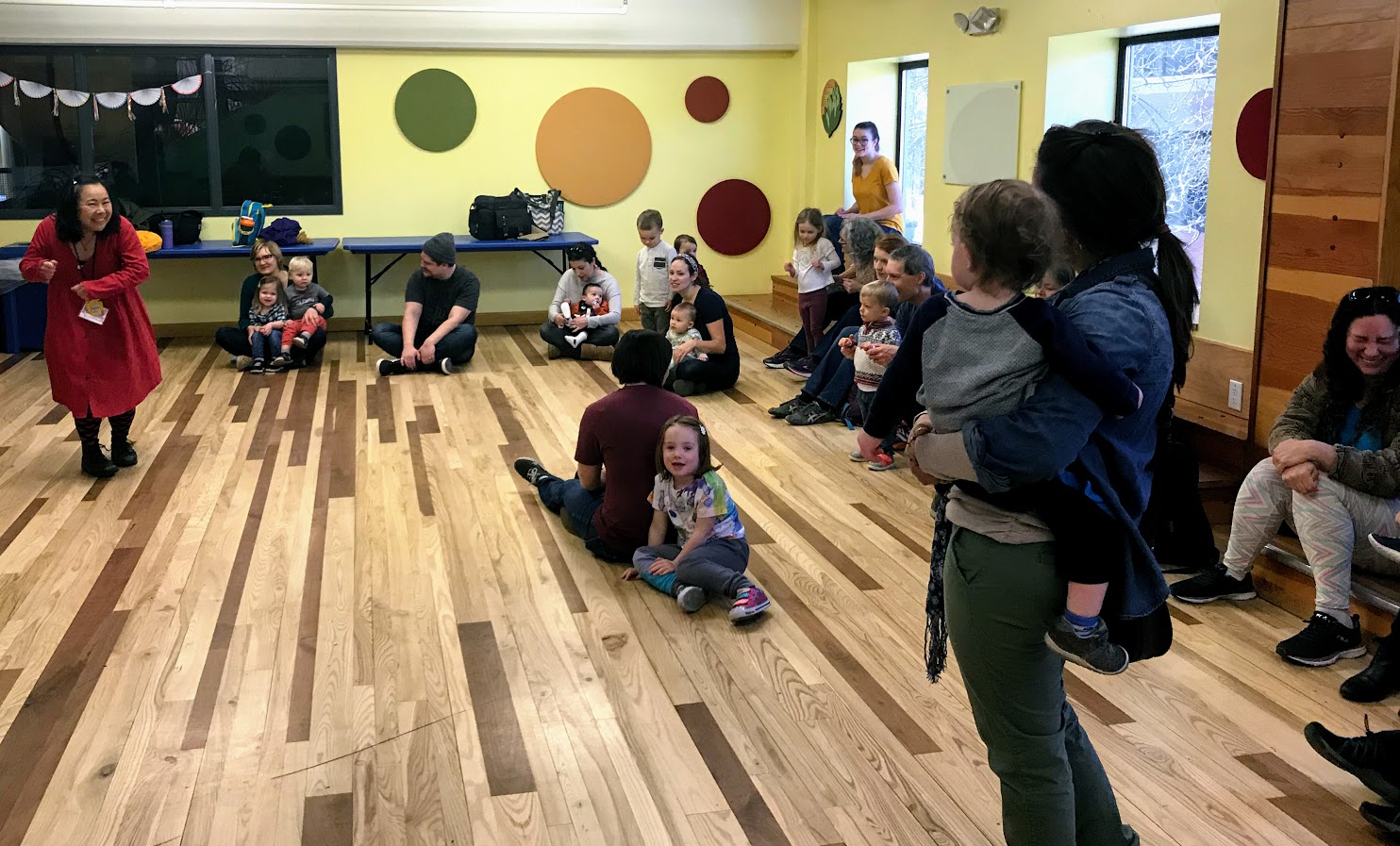
Junko greets a new arrival during Music with Junebug, held at the museum on Wednesdays.
Week of the Young Child coincides with our Access for Everyone campaign. Please consider making a gift to help us provide these benefits to all children within our community.


 Way back when I was entering the job market I interviewed for a company that designed and tested the promotional items, or prizes, included in cereal boxes, snack foods, and fast food kid’s meals. I found the research behind what the company was doing extremely fascinating. It was a thrill to meet the people who designed the prizes I would see on TV and always hoped to find in the bottom of my caramel corn box.