Category Archive: Exhibits

  1. Log Cabin on the move!

    Leave a Comment

    Madison’s only existing, historic log cabin was lifted off of its foundation on March 3, in preparation for its move to a storage lot on E. Washington Ave. 

    The Log Cabin dates back to around 1838 and is among the oldest surviving dwellings in the state. It arrived at Madison Children’s Museum just before the museum opened at its current location and was restored on site. The 288 sq ft. (16’x18′) cabin became a popular exhibit, visited by tens of thousands of children in the roughly ten years it was open.

    The Cabin was located behind the museum at the corner of Dayton and Hamilton streets. It sat on the deck of the museum’s former parking lot, set into a period-correct landscaped and planted yard. The parking lot had deteriorated over the years to the point that it could not be used, and the museum was actively planning to repurpose that space. In 2019 the cabin was closed to visitors to prevent further deterioration of the parking structure. During the pandemic, the museum launched a new initiative, Our Future In Play, and part of that effort includes creating a new, 10,000-square-foot exhibit in the place of its former parking lot. The new exhibit will feature the historic cabin, an awe-inspiring climbing sculpture as centerpieces to a new outdoor play space, and assorted smaller hands-on exhibits and adventures.

    While it is likely to return to a similar position in the new exhibit, the Log Cabin had to be moved to make way for demolition of the former parking lot and then new construction. The initiative also includes a fundraising effort to pay for that exhibit—as well as other necessities the museum requires to weather closure. The community has so far generously given over $3 million dollars toward the final goal of $4 million, which must be raised by the end of June 2021.

    Recovery from the pandemic and the return to downtown and former activities will likely be slow in spring and summer, with a continued emphasis on outdoor activities, increasing the need for an outdoor exhibit in all seasons.

    This new exhibit will provide a safe place for all children to play, to come together once again from all neighborhoods. The exhibit aims to provide a fun, healthy outlet for getting young bodies in motion; a nurturing space where children can experience the healing power of play after a rough year or more; and a cultural anchor that draws families back to the square and the surrounding downtown. When the Log Cabin returns it will become an important part of this new exhibit’s year-round play space.

    After being extracted and loaded on the truck, The Log Cabin will be transported to Reynolds Moving and Storage on E. Washington Ave., where it will spend the rest of the winter, spring, and early summer before the process is reversed and it is relocated back to the museum.

  2. Welcome to Wiggle Honk Mountain

    Leave a Comment

    Exhibits Update — Winter Window Installation
    Now through February 29, 2020

    Signpost_logo_RGB-01.png

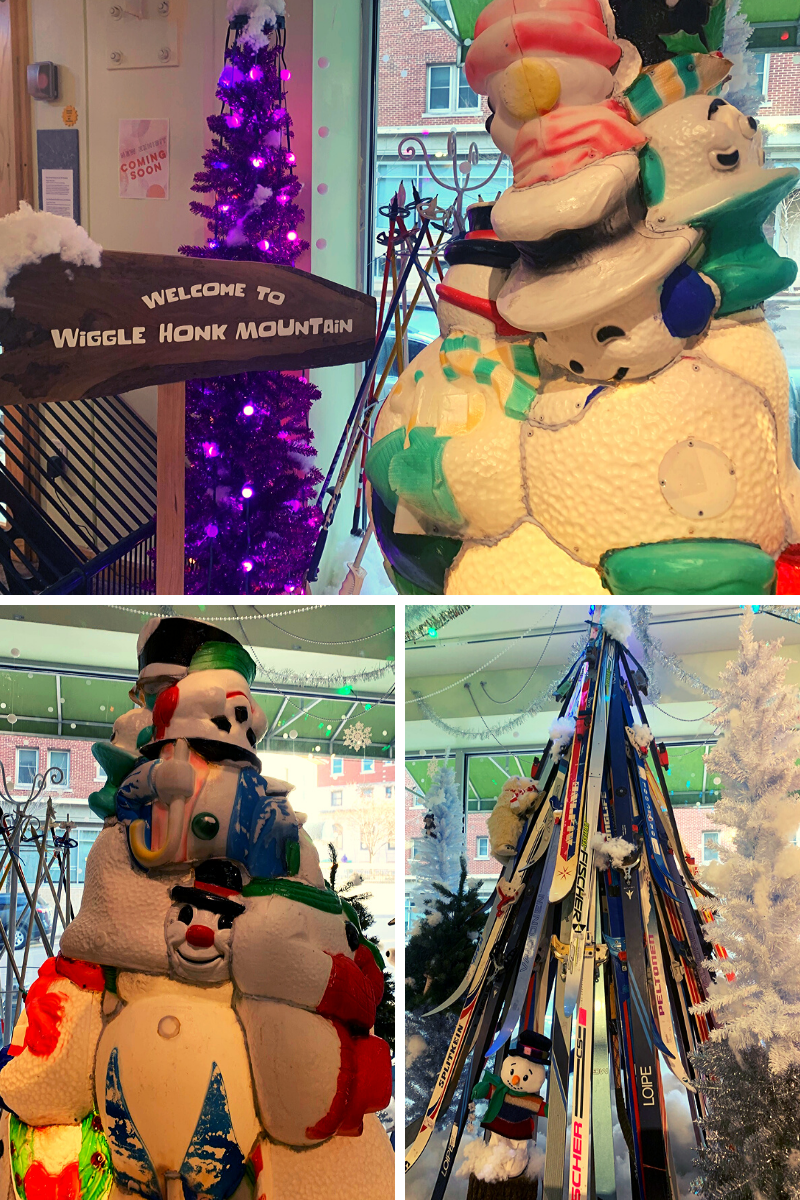
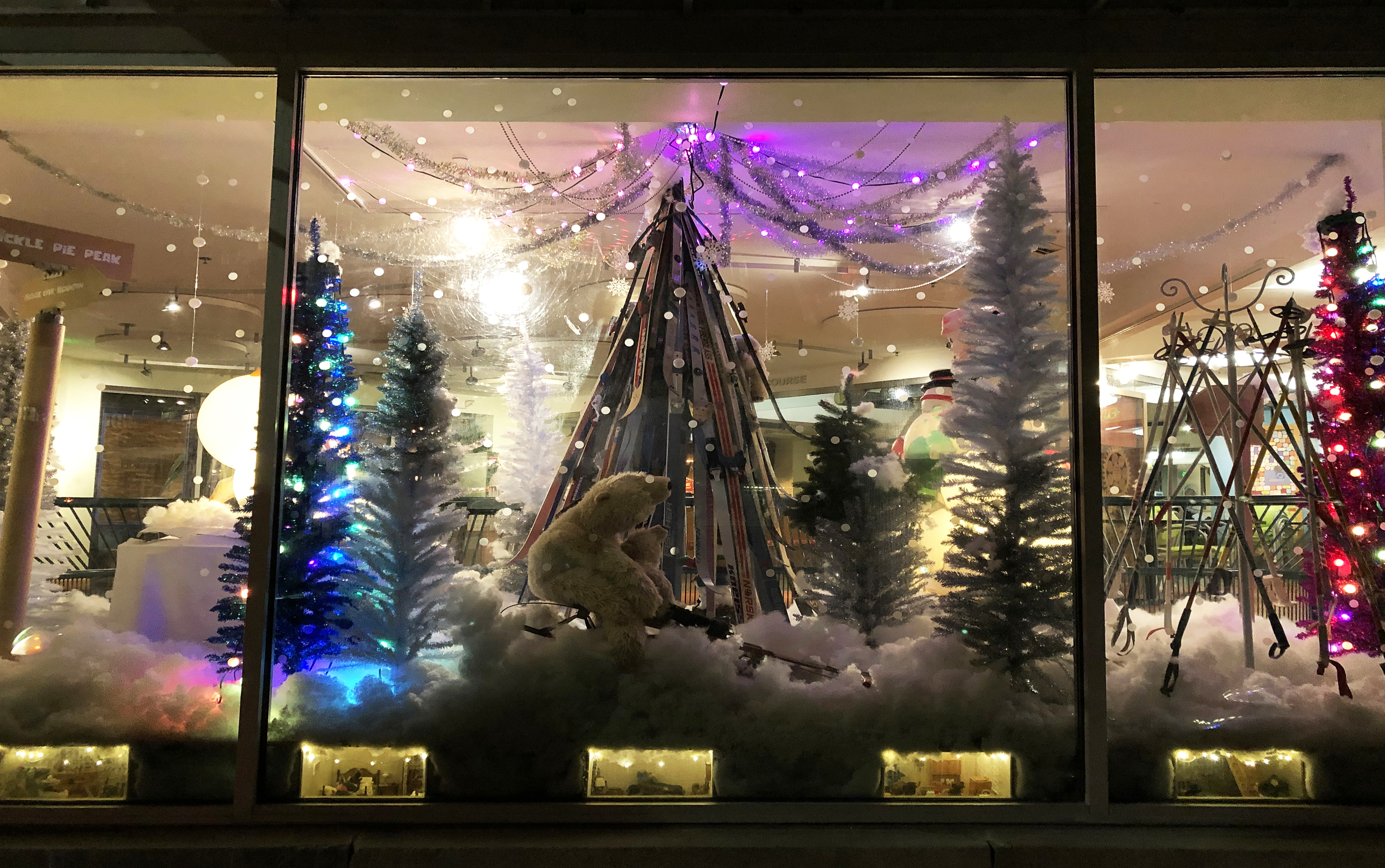
    This new, mash-up, winter holiday installation fills our main, Hamilton Street window. In this outdoor wintery window display, Welcome to Wiggle Honk Mountain, seasonal objects have been repurposed, reconfigured and reconstituted in uncommon ways to create a delightful scene in a uniquely Madison Children’s Museum way. Harkening to the building’s past as a Montgomery Ward Department Store with extravagant seasonal window displays, the museum plays up its holiday spirit with lights, movement, silliness, art, and action. The display features artwork by celebrated local sculptor Gail Simpson.

    Wigglehonk Mountian.png

    Welcome to Wiggle Honk Mountain inspires children to mix and match lights, metaphors, and ideas while altering the mood of the cheerful winter scene itself. Children love mash-ups; they combine dissimilar ideas each and every day as they learn and grow. This goes to the heart of learning: They take bits of new knowledge and add to what they already know to create new meaning right before our eyes.

    [youtube https://www.youtube.com/watch?v=M-bHMRkj7kI]

    This display is the first of a series of temporary exhibitions that fill the space formerly filled by the Laminar Ladder water sculpture. The Ladder was a beloved part of the museum since it opened in its current location in 2009; however, the constant humidity and splashes were taking a toll on our historic building. The sculpture was removed in mid November.

    Welcome to Wiggle Honk Mountain will remain up until the end of February, and will be replaced by another limited-time artistic installation. A long term installation is scheduled for the summer of 2020.

    Come to the museum and give your children’s imagination and sense of adventure a boost. The museum is currently celebrating Winter Wonder Weeks, with winter-themed crafts, activities, and special events running through January 5.

    WiggleHonkMountain_wide.jpg

  3. Try to Catch the Wind…

    Leave a Comment

    How can we begin to imagine the potential harnessed power of the sun and the wind?

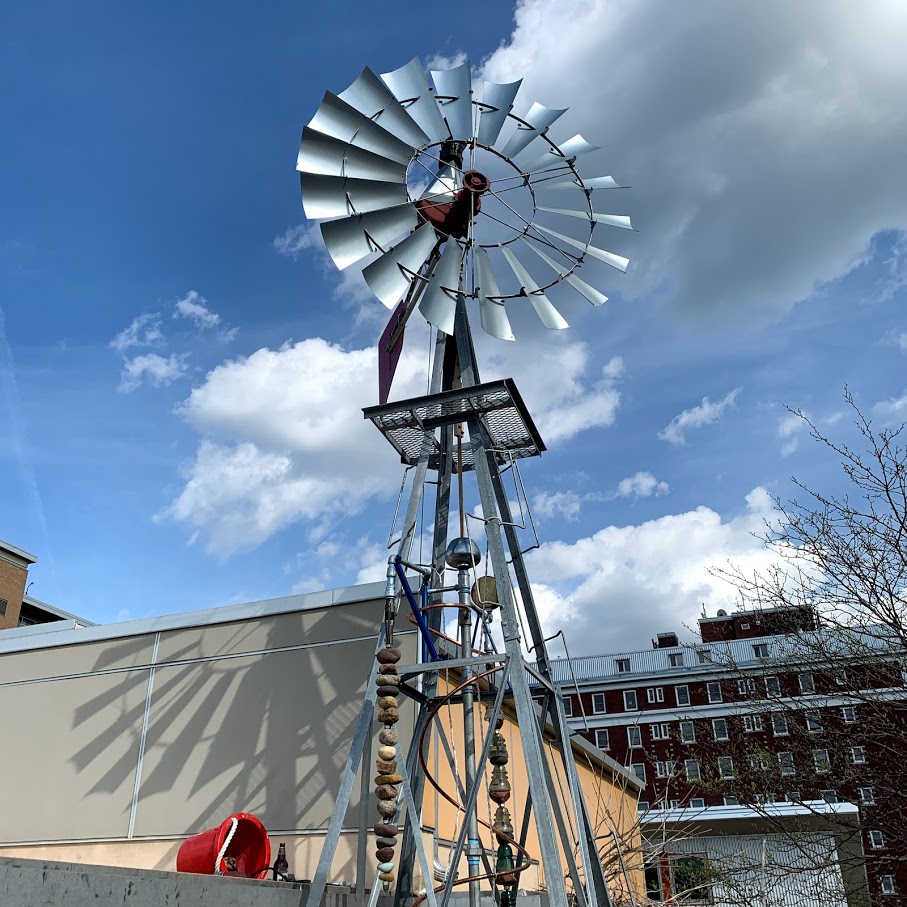
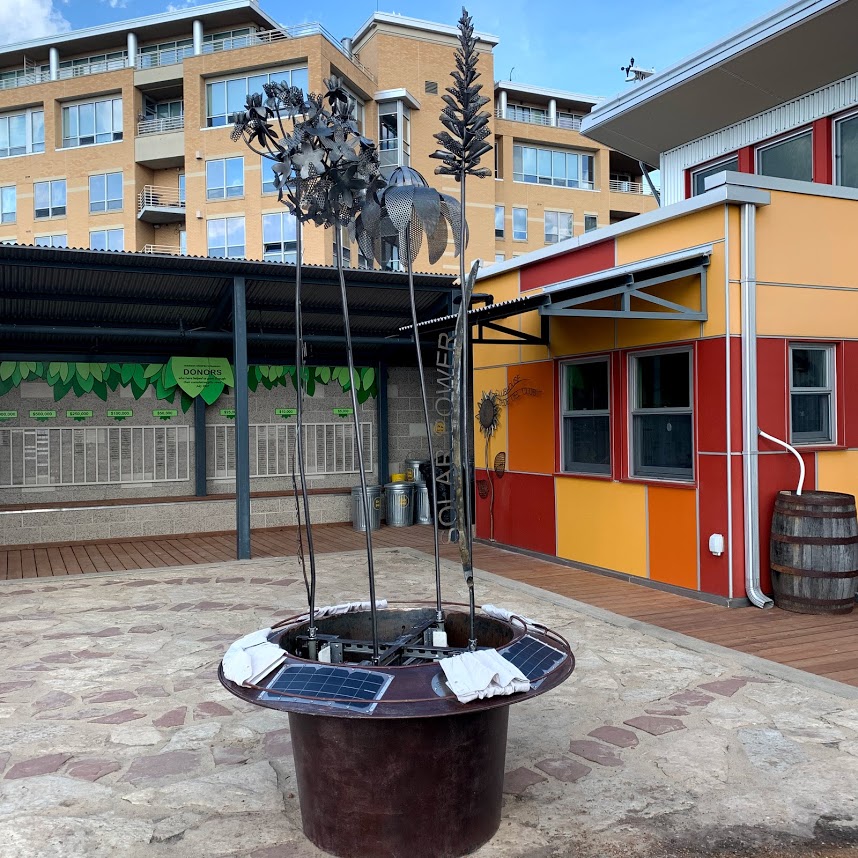
    Forces of Nature is a new initiative, recently installed on the museum’s Rooftop Ramble, that uses a windmill and solar-powered flowers to teach children about sustainable ways of collecting, producing, and using wind and solar energy.

    IMG_1198.jpgThe new wind-generated water pump will help children visualize and understand the power of the wind. At first glance, it looks like an ordinary windmill you’d find on a farm. But look closer and you’ll find that the wind powers a pump which draws water up and then sends it cascading through a Rube Goldberg–style machine until it is collected in a tuba-like horn at the bottom.
    IMG_1206.jpg

    A solar flower feature, where flowers move with the sun’s energy, provides opportunities for children to experiment with solar energy: Move the pads to cover or uncover the solar panels and watch the giant metal flowers respond as they spin above.

    These Forces of Nature features complement the long-standing rooftop solar panels installed on the roof.  We’ve also added a bird-themed, model electric car to the Clubhouse.

    Information on sustainable energy is readily available online and in books. But learning about solar and wind power in an interactive and beautiful environment—with the wind and the sun on a child’s skin as they explore—will teach lessons that will be uniquely understood and remembered.

    We hope Forces of Nature will expand children’s understanding of sustainable energy, planting the seeds for a society better prepared to use sustainable energy systems.

    Forces of Nature exhibit components were generously supported by Madison Community Foundation, MG&E, and Endres Manufacturing Company Foundation. Watch for phase II rooftop improvements in September of 2019.

  4. Building a Structure for Unstructured Play – Exhibit Design at Madison Children’s Museum

    Leave a Comment

    The first hint of fall is in the air, and for many families, schedules are shifting back to routines that include work, school, and often an array of extracurricular activities designed to strengthen kids’ bodies and minds.

    With all this structure, it’s also critical to make time for unstructured play.


    38577788475_62775fb91d_k

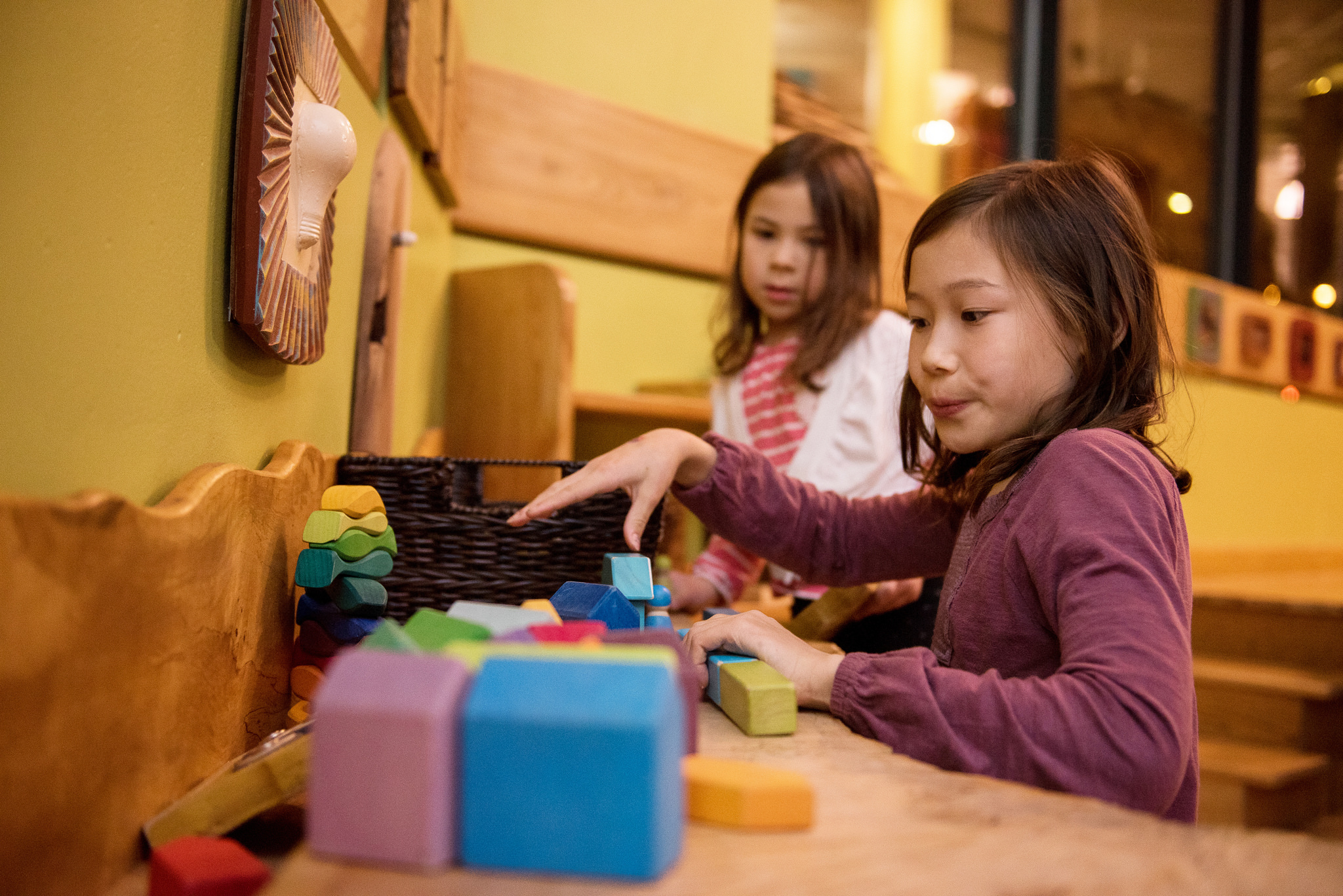
    Kids benefit when they self-guide their play, using toys and spaces that are open-ended, like the environments created by Madison Children’s Museum exhibits. Here, two girls play with brightly colored blocks in the museum’s Wildernest exhibit.


    Experts agree, children get an extraordinary number of benefits from unstructured play—playtime that they define, rather than letting a coach, teacher, game designer, or product marketer tell them how to do it. Play promotes creativity, builds motor skills, and helps kids work through their fears and stress. There is a strong correlation between unstructured play and executive function skills. And executive function skills are what kids need to succeed in school (I will listen to the teacher, even though I can see other kids playing out the window), as they grow (I will obey my curfew, even though my friends still want to hang out), and as adults (I will make myself nutritious food, even though I could eat Apple Jacks and Doritos for three meals a day and no one would stop me.)

    Yet so much of what fills our kids’ hours, particularly during the school year, is highly structured. Kids go from school days where recess is often squeezed out to make way for more instruction time and then participate in a parade of beneficial but highly structured activities: music lessons, sports, clubs, scouting, etc.

    A recent New York Times article, titled “Let Kids Play” explains it well:

    “We’re in a climate where parents are feeling like they need to schedule every minute of structured time, and 30 percent of kindergartens offer no recess,” said Dr. Michael Yogman, chairman of the A.A.P. committee on psychosocial aspects of child family health and the lead author of the statement. To some, he said, “play is seen as irrelevant and old-fashioned.”

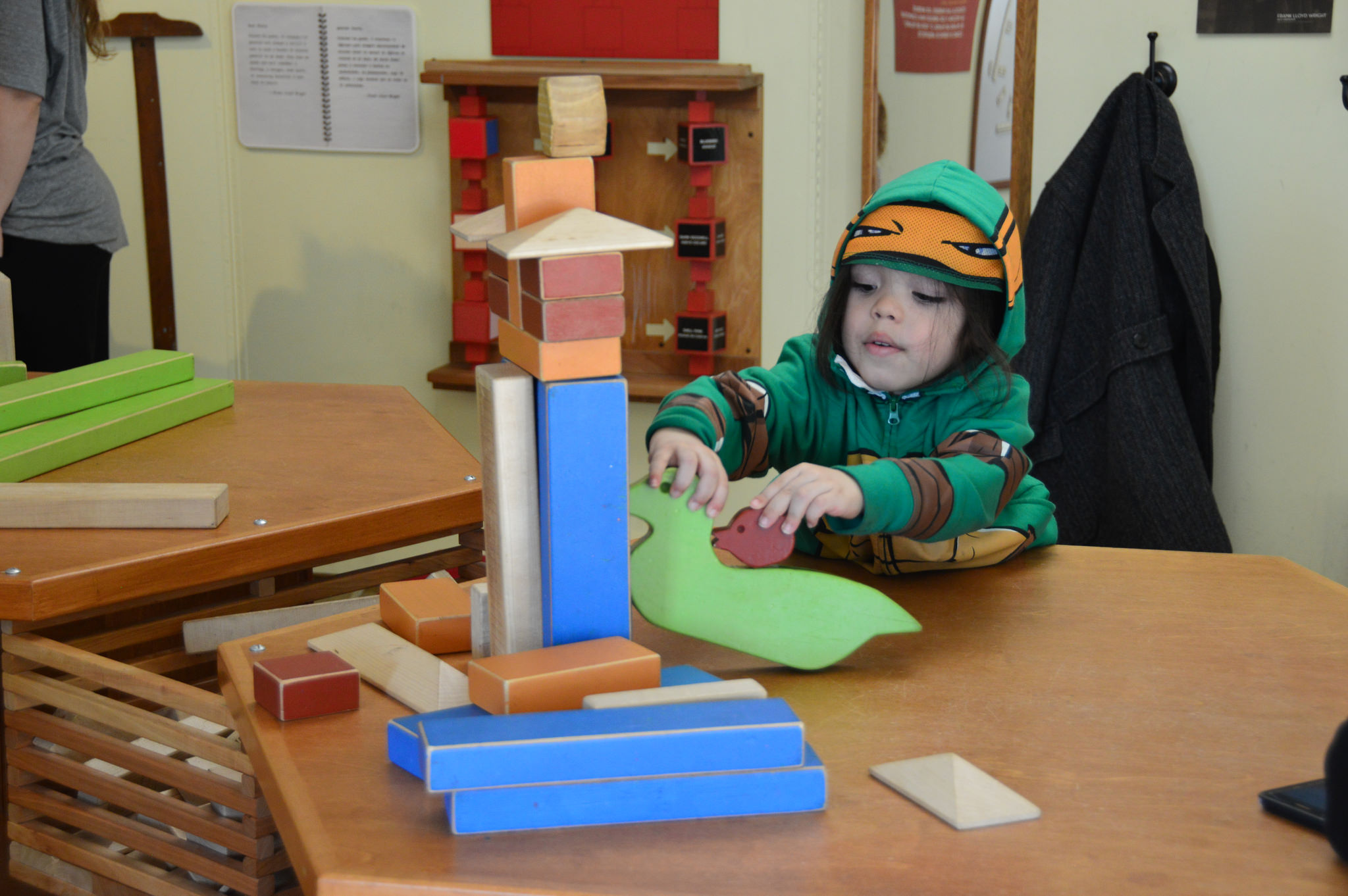
    Madison Children’s Museum is built with unstructured play in mind. Every one of our exhibit areas—from the Wildernest little-kids area, through Coops to Cathedrals on the second floor, and up on the rooftop—offers kids an environment that inspires play without telling them how to go about it. For example, there are building blocks in the farm section of Coops to Cathedrals, but no guidelines as to what should be built. The result is that on any day you could find kids constructing a block house for the model calf, a wall across half the exhibit, a long parade of blocks winding across the floor, or tall skyscrapers reshaping the view out the window. Similarly, the climbing equipment on the roof is sometimes a unicorn-populated castle in a forest, and other times a rocket ship, or a cage to contain a dragon—depending on the imagination of the children who happen upon it.

    41745721225_12845160e6_k

    A child plays with evocatively shaped blocks in the museum’s Coops to Cathedrals exhibit.

    None of this is an accident. In the grand Madison tradition of “think locally” our exhibits aren’t purchased piecemeal from elsewhere; they’re built by local artisans and artists on staff, in consultation with our staff and board experts on child development. We recognize the benefits of unstructured play and build our exhibits accordingly, providing tools and toys that can be used a myriad of open-ended ways, and with a minimum of instruction by staff or signs.

    Sometimes it takes kids, but more often their parents, a little while to break out of the mindset of structured play. Our discovery guides, who help assist and tidy exhibit spaces during the day, regularly get asked how a particular portion of an exhibit “is supposed to work.” The answer is, generally, that it works, however, the child thinks it should work.

    Deb, our CEO, often talks about a study where children were given an unusual “novel” toy. The children, given no information as to what it did, found many different ways to play with it. The children who had an adult demonstrate a few, specific ways to operate the toy only played with it in that limited manner. Madison Children’s Museum takes these lessons to heart; the lack of directional signs in our exhibits is deliberate, to enable invention and creativity, and encourage parents to follow the lead of their children.


    42750395592_797ed7e67e_k (1)

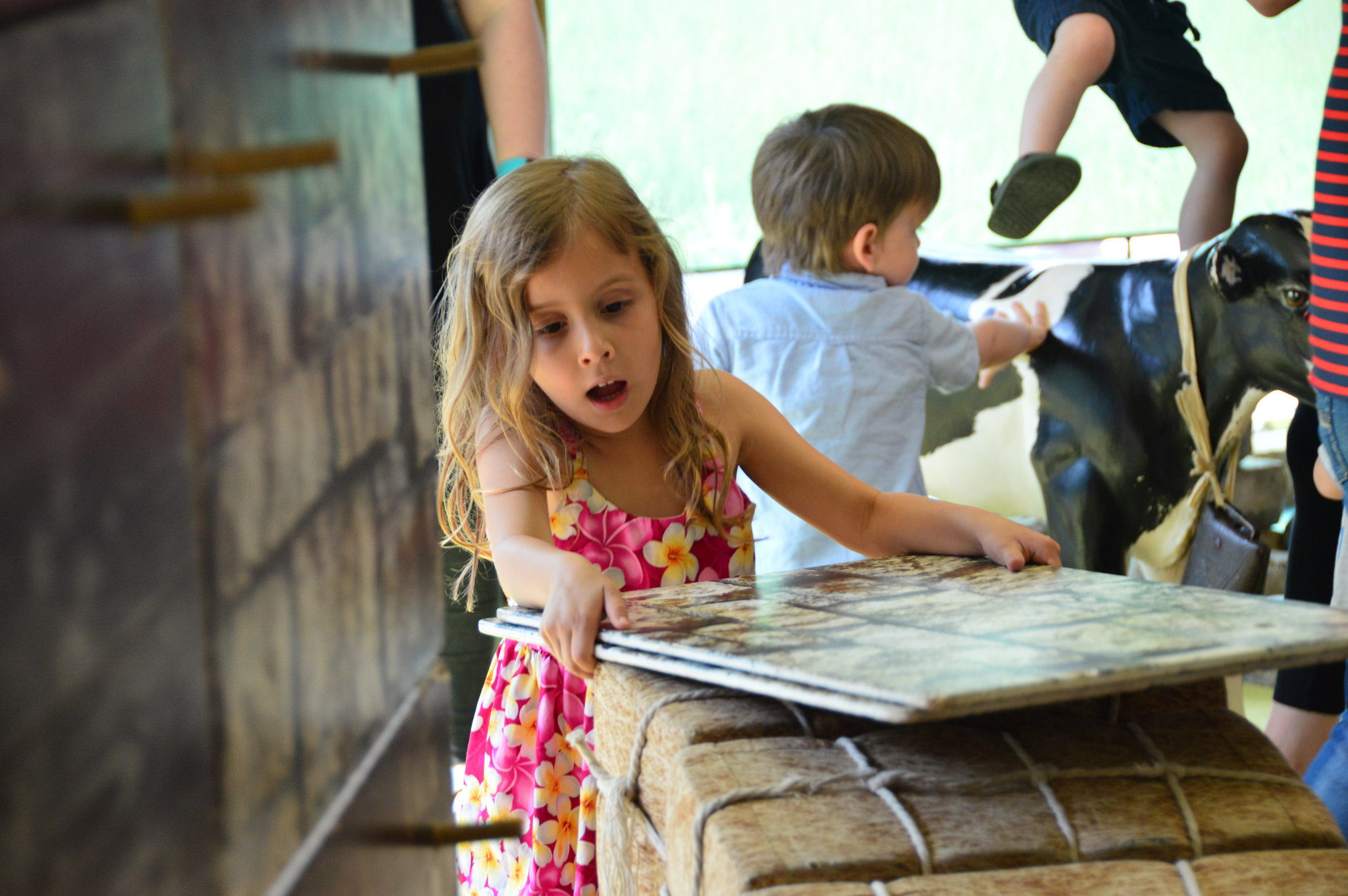
    A girl assembles large panels in the farmhouse section of Coops to Cathedrals. What she creates is up to her imagination.

    As your family returns to the rhythms of the school year, make unstructured playtime a priority. Provide your kids with toys that don’t suggest a narrative (generic, rather than established characters), let them play in a park with or without play equipment, and plan a visit to Madison Children’s Museum and let them lead the way on where and how they want to play.

  5. Learn From Nature

    Leave a Comment

    By Joyce Hemphill (Queen of Play)

    37497286391_302a7ab8ef_o

    My young neighbor was telling me about a nature walk she took with her mom. They set out looking for ‘signs of spring.’ They came across plenty of birds, specifically robins, and saw a wide array of flowers. One flower stood out. She couldn’t remember the name, but it was small and purple, with leaves that looked like hearts. Her brother chimed in, saying “We also saw a bright yellow flower on a long stem, and it was round and had lots of small leaves that looked like a row of triangles. Can you guess what flower we saw?”

    Isn’t nature amazing with all of its colors, shapes, textures, patterns, smells, and sounds? Nature merges the classroom and the playground, expanding the possibilities for open-ended play in an environment that encourages creativity. Go outside and take a look. Nature provides a perfect resource for playing scavenger games. These games are simple and effective learning activities that engage children with the natural world while helping develop observational, analytical, and memory skills that carry over to the classroom. For example, while at the park or on a walk in your neighborhood do a “Where’s ROY G BIV?” search and be on the lookout for any Red, Orange, Yellow, Green, Blue, Indigo, and Violet.

    Nature-based scavenger games can also be played in the outdoor spaces at the Madison Children’s Museum. Check out the Rooftop Ramble, Urb Garden, and Wildernest for examples of naturally occurring squares, circles, triangles, and other geometric shapes. Look for examples of symmetry and asymmetry in the various plants and animals you come across. Take a more focused look at spaces you have played in before and perhaps you will see something in a new way.

    Wisconsin native and celebrated architect, Frank Lloyd Wright, encouraged his students to not only study nature, but to fall in love with its wonders and beauty. Nature was Wright’s mentor, and its influence shines through in his work. The patterns and shapes in his designs echo the natural beauty of the outdoors

    The museum’s Frank Lloyd Wright inspired From Coops to Cathedrals exhibit will expand your options for play, including nature-based scavenger games. Not only can you do a search for ROY G BIV and scavenge for shapes, you can test your identification skills by matching the patterns you see inside the museum with those in nature.

    24270075118_eb68c82ece_z

    I encourage you to become a student of nature. Explore, investigate, compare, contrast, wonder, snoop, seek, and find.

    (YiP) Yours in Play

    Joyce

    BTW, did you figure out what flowers my neighbors saw? Answer: Wild violets and dandelions.

  6. Celebrating 100 Years of the Wisconsin State Capitol Building at Madison Children’s Museum

    Leave a Comment

    Madison Children’s Museum is celebrating the 100th anniversary of the Wisconsin State Capitol with a series of seasonal events and kids’ workshops. The museum’s participation in this event is in partnership with the Madison Community Foundation and their Capitol Century grant, an initiative of their anniversary year of giving.

    On Saturday, November 18, the museum lights up for Shine On Madison. At 6:08 p.m. downtown Madison will come alive as all of the holiday lights — from businesses, cultural establishments, and the city’s own decorations — all turn on at the same moment. Madison Children’s Museum is delighted to be a part of this downtown-wide celebration.

    Here’s how we’ll help celebrate the first ever Shine event: On Saturday, November 18, the museum will be open to the public with free admission from 5 to 8 p.m. Visitors are invited to join in special activities, including lantern-making on the Rooftop Ramble, and building a capitol playhouse in the Art Studio. In the museum’s rooftop garden, the Capitol building will be replicated in a very different format: the museum’s popular rooftop climbing structure has been reimagined as the nearby Capitol dome, and will be illuminated from within at 6:08 p.m. The rooftop capitol will remain as a winter-long part of cold-weather activities at the museum.

    37347668865_0090cb5182_z

    The Wisconsin State Capitol building as seen from Madison Children’s Museum


    Also during the Shine On Madison celebration, the museum’s newest Sidewalk Surprise art installation will open. Mini Caps celebrates the Wisconsin State Capitol building with tiny capitol buildings in many different artistic styles, created by local artists Justin Bitner, Cheryl DeWelt, Renee Earley, Eric Ford, Martha Glowacki, Tracey Honn, Angela Johnson, Erika Koivunen, Chris Murphy, Jeff Repko, Grace Sullivan, John Taylor, Michael Ward, and Claire Wilson. Visible from both the museum’s lobby and the N. Hamilton Street sidewalk, the art installation demonstrates how the same iconic building can inspire artists in many differing ways.

    The capitol-inspired activities continue into the holiday season. Within the museum, even more capitol buildings will be constructed using two fundamentally different, kid-friendly, materials: plastic Lego building blocks and gingerbread.

    The gingerbread house–style capitol is being laser-cut by Sector67, and will be constructed in stages, over the weekend of December 2 and 3, 10 a.m. to 4 p.m. Simultaneously, traditional gingerbread houses will be created and displayed during the museum’s annual Casas for CASA event, which supports court-appointed advocates for abused or neglected children.

    The evening of December 6 will be Lego Capitol night at Madison Children’s Museum. As part of the museum’s monthly Free Family Nights, which offer special programming and no-cost admission to the public, the first 200 kids will receive their own Lego mini-capitol building kit. A much larger Lego model of the capitol will be on display that evening, with construction completed by the artist as children watch.

    In addition to the capitol-themed special weekend events, several of the museum’s drop-in programs will involve capitol, architecture, and building themes, encouraging kids to find their inner architect though building and sculpting with unconventional media. These programs nicely complement Coops to Cathedrals: Nature, Childhood, and the Architecture of Frank Lloyd Wright, the museum’s newest exhibit, exploring the inspirations of the famous architect.

    The numerous interpretations of capitol buildings, ranging from less than an inch tall to several feet tall, contrasted with the magnificent capitol building so clearly visible from the museum’s front door, will inspire children to consider the history and art that is part of their daily lives in Madison. The Madison Children’s Museum is grateful to the Madison Community Foundation for their support of this innovative, imaginative project.

  7. Repetition and Play

    Leave a Comment

    By Joyce Hemphill (Queen of Play)

    9360125894_77a89f0991_o

    I was chatting with a first year nanny who is caring for two young children; the oldest will be starting kindergarten in the fall. Once a week she takes them to the museum. The kids love the museum, BUT they always want to see the same exhibits. The nanny is frustrated because there is so much more to see and do. Her situation reminded me of when my sons were that age and how they always wanted to play the same game and read the same book over and over.

    “Don’t worry,” I told her. “There will be days when they want to explore more and try different things, but for now it is OK for them to return to what is familiar. It’s natural. Children find comfort in knowing how things work and what comes next.”

    Think about it, don’t we all take comfort and gain confidence in something the more we do it? Has your confidence as a driver improved from the time you first took the wheel?  Have your knife skills improved with each meal you have prepared? Repetition builds confidence. Repetition improves memory. Repetition is a way of learning.

    So if the children want to head straight for the Wildernest or the Rooftop Ramble, let them. Give them their time. And while they are in their favorite area ask questions and give suggestions to expand their play. Offering a twist on something familiar enhances creative problem solving while staying within their comfort zone.

    Then, after having fun in their favorite spot, branch out and move on to another exhibit. Take it slow. Encourage them to explore, and point out areas of potential interest along the way. Walk up and examine a play structure more closely. How does it work? Does your child see it the same way? Many of the exhibits are designed for open-ended play, so together you can brainstorm different possibilities for play. Your child’s curiosity will lead the way. Be there to offer support and encourage that curiosity. And if they are hesitant, don’t be discouraged. Be patient. On your next visit they may be ready to try something different. There are many adventures to be had at the museum and time is needed to enjoy each and every one to the fullest.

    YiP (Yours in Play)

    Joyce

  8. Small World

    Leave a Comment

    By Joyce Hemphill (Queen of Play)

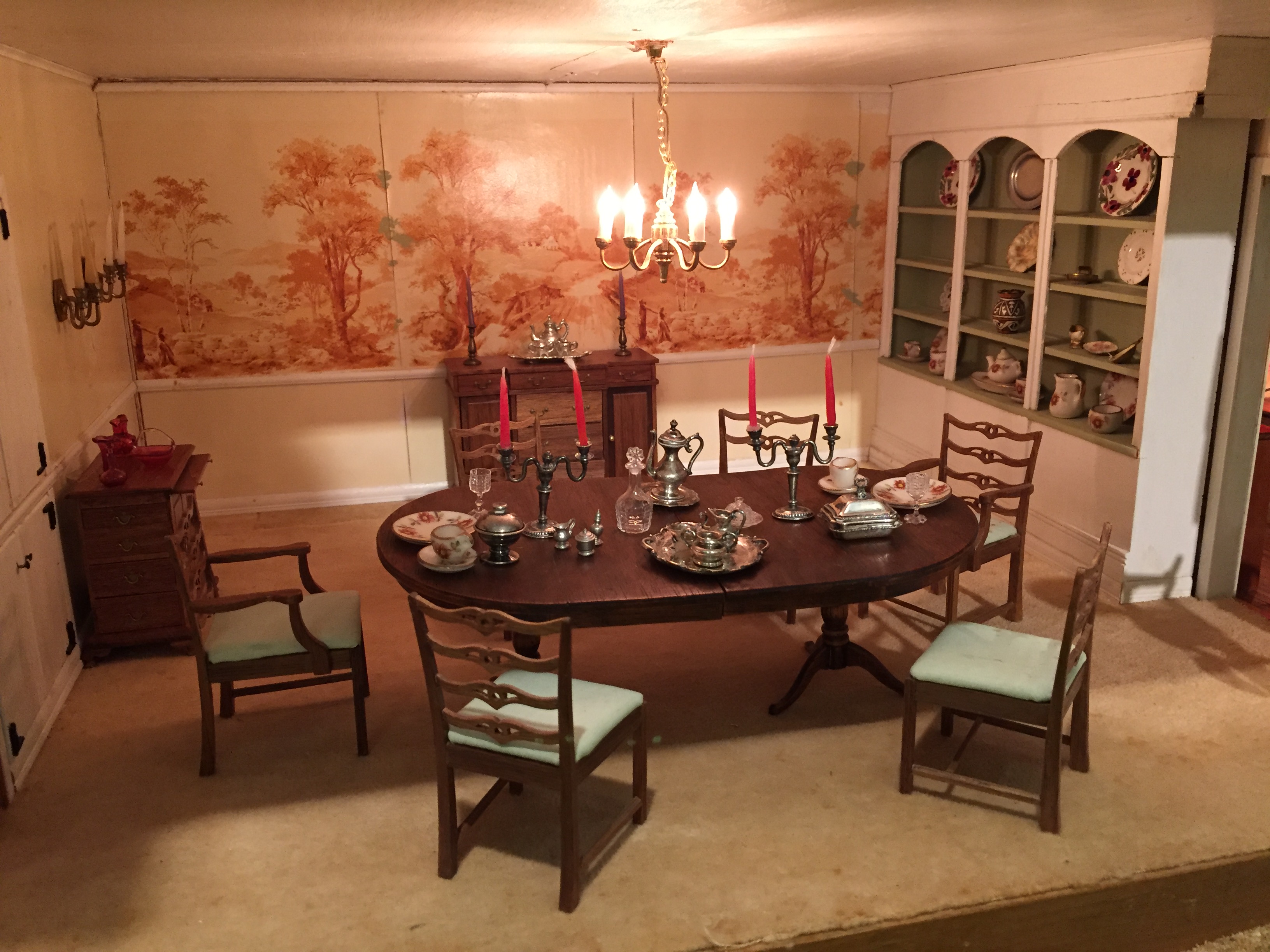
    I was talking with a friend recently about the Museum’s new Get Small: Miniatures, Dolls & Houses from the Museum’s Collection exhibit. She herself was very interested in seeing the extensive collection of miniatures, dolls and doll houses acquired over the years through the museum’s collaborative relationship with American Girl, but given that her son is “all boy” he probably wouldn’t share her interest. Seriously?

    The exhibit is an impressive display of the creativity and craftsmanship that help bring these models to life, but more important, dolls and miniatures are a valuable resource for any child as they learn about the world around them. Children are attracted to small versions of everyday things because unlike the big and oftentimes overwhelming everyday world, in a “small world” they are the giants. This sense of control provides comfort and builds confidence. For a child, downsizing is a good thing.

    image4

    The exhibit is centered in the Community Concourse with smaller displays located throughout the museum. Viewing these miniature houses and models presents an ideal opportunity to have a conversation about what makes a home. Do all homes look alike? What are some daily routines in a home? Toss in some real life situations for children to solve. Pretend you live in the miniature. Where would you like to have a birthday party? What if you were expecting guests? Where would they stay? Where would you play? Don’t be surprised if your child starts talking about special gatherings that happen in your own home.

    After checking out the Get Small exhibit, stay small with the Hole in the Wall experience. Explore the museum for six hidden miniature worlds that can only be seen through a peephole. As you and your child peek inside you might challenge one another with an impromptu game of “I spy with my little eye …” And on the way home brainstorm ways in which the small version is similar to, or different from, the real one.holeinthewall_eyeicon3

    Remember that the most fascinating aspect of miniatures lies in the details. Take your time as you explore the exhibits and talk about what you see. Ferris Bueller said it best: “If you don’t stop and look around once in a while, you could miss it.”

    YiP! (Yours in Play)

    Joyce

  9. Farewell Funkyard Sale

    Leave a Comment

    14620870962_4b93f2494f_k

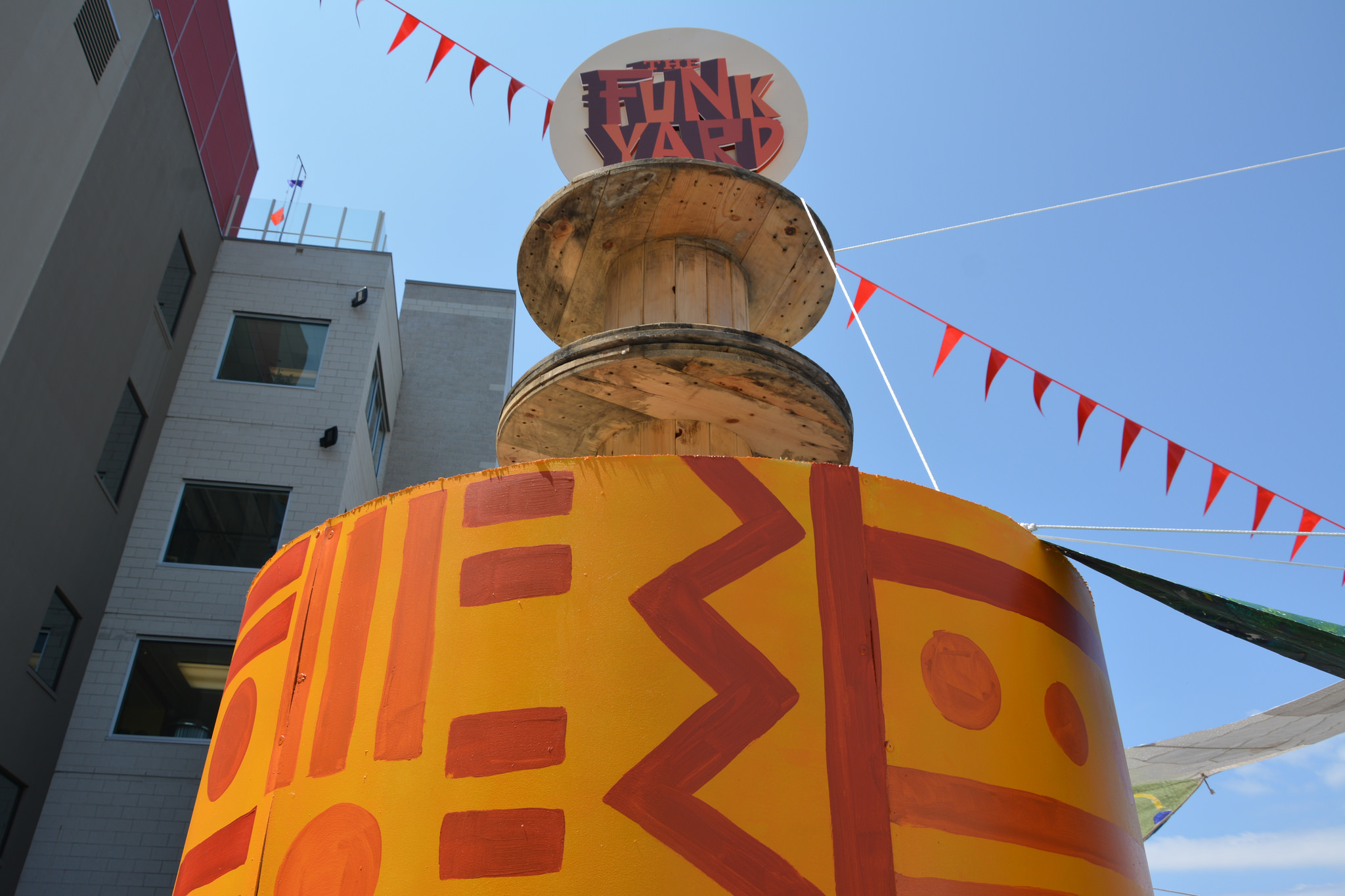
    Our space is evolving. What is now called the “back yard” at Madison Children’s Museum started life here as a parking lot. When the space ceased to be functional as a parking lot, we transformed it into the Funkyard.

    Over one hundred thousand people have enjoyed playing in this unique playground over the last two years. Now the Funkyard is closed, to be sold and taken to new homes.

    Items, quantities and prices are listed on our Facebook page. 

    This May, the back yard will reopen in a different form, featuring a fanciful bridge to transport visitors from the museum to the Log Cabin.

    Over the next few years, we will continue to experiment with different approaches to using this valuable, centrally located space for healthy outdoor play and learning.

    Some years down the line, we envision a grand playscape that will showcase our community’s commitment to kids and play.

    Items go on sale Tuesday, November 24. Most items are viewable on our lot without an appointment. Call 6083540149 for further details. Sale ends Saturday, November 28 at 5 p.m.

    Delivery

    Delivery is available from University Towing Service. Deliveries cost $30 per item (Dancing Stage is $90). Deliveries must be within 20 miles of Madison Children’s Museum. Delivery will be arranged directly through the University Towing Service. Items can be delivered on November 30, December 1 or December 2.

    Disclaimer

    All goods in this sale are sold as is and are not warrantied in any manner or for any length of time. The wooden structures should be considered as art and not viable playground equipment or furniture. Items that were safe for children to play around when they were installed in the Funkyard exhibit may not be safe in your own backyard. The Funkyard was monitored by paid staff during open hours and exhibits staff were attentive to maintenance and repairs throughout. Therefore, we cannot guarantee that these items will remain safe to use once they leave our property. Though items such as cable spools should make fairly sturdy tables the museum does not warranty them as such. Larger items will likely require disassembly and reassembly. The museum can provide photos of what they looked like before they were taken apart, but cannot provide instructions or help in reassembling. The Dancing Stage and Castle with Dog House Entrance will be dissembled by museum staff before purchase.

  10. Eleven-Year-Old Brings Farmyard Friends to Museum for Gallery Night

    Leave a Comment

    By Finn Jackson
    Artist

    happy pig13

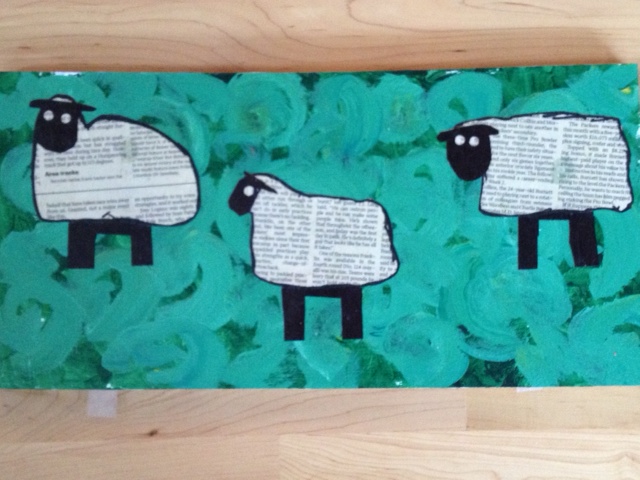
    Hi, my name is Finn, I am 11 years old, and I really like to paint and draw. My second favorite things in the world are animals. When I went to Heartland Farm Sanctuary, I didn’t realize that it would change my life.

    Heartland is the only animal sanctuary for farm animals in the state. It also hosts a farm camp so kids of all ages can learn about farm animals and their care. When you first come to Heartland, you will hear much squawking and not much reason to donate money, but all you have to do is stay one day and you will see why I do what I do.

    I first came to Heartland through a camp and immediately thought of a girl who I had read about who made and sold drawings to help birds in the Gulf oil spill. I decided to make and sell portraits of Heartland’s animals and donate the money to the farm to help pay for housing and food. So far I have donated over $3,000 to help the animals of Heartland.

    These [featured pieces] are the best of my more than 40 paintings. If you are interested in buying a painting or a commission, please give your name and number to the front desk. Thank you for coming to my show.

    Finn-Jackson-Madison-Childrens-Museum

    About the Artist

    Eleven-year-old Finn Jackson paints and draws portraits of the animals that reside at Heartland Farm Sanctuary and donates proceeds from sales of his artwork to the farm. Jackson started combining painting and philanthropy when he was just seven years old. A portion of sales from Finn’s work will be directed toward improvements to help keep his beloved animal friends warm, safe and dry.

    Jackson will attend the exhibit opening on October 2 – as will a number of live farm animals, who will join forces with the Madison Children’s Museum Rooftop chickens to help celebrate.

    About Heartland Farm Sanctuary

    Heartland Farm Sanctuary, located in Verona, is the only farm animal sanctuary in Wisconsin. Heartland is a nonprofit organization with a mission to provide care for farm animals in need, nurture people through the human-animal bond, and foster respect and kindness toward animals and each other. Heartland recently launched a fund-raising campaign to renovate its 18,000 square-foot barn. Learn more at heartlandfarmsanctuary.org.

    Farmyard Friends opens on October 2, 5 p.m. to 9 p.m., at Madison Children’s Museum, 100 N. Hamilton St., during Gallery Night. Admission to the entire museum is free on that evening. In addition, the Community Concourse, where the exhibit is housed, is always free to visit.