Category Archive: Wildernest

  1. Building a Structure for Unstructured Play – Exhibit Design at Madison Children’s Museum

    Leave a Comment

    The first hint of fall is in the air, and for many families, schedules are shifting back to routines that include work, school, and often an array of extracurricular activities designed to strengthen kids’ bodies and minds.

    With all this structure, it’s also critical to make time for unstructured play.
     

    38577788475_62775fb91d_k

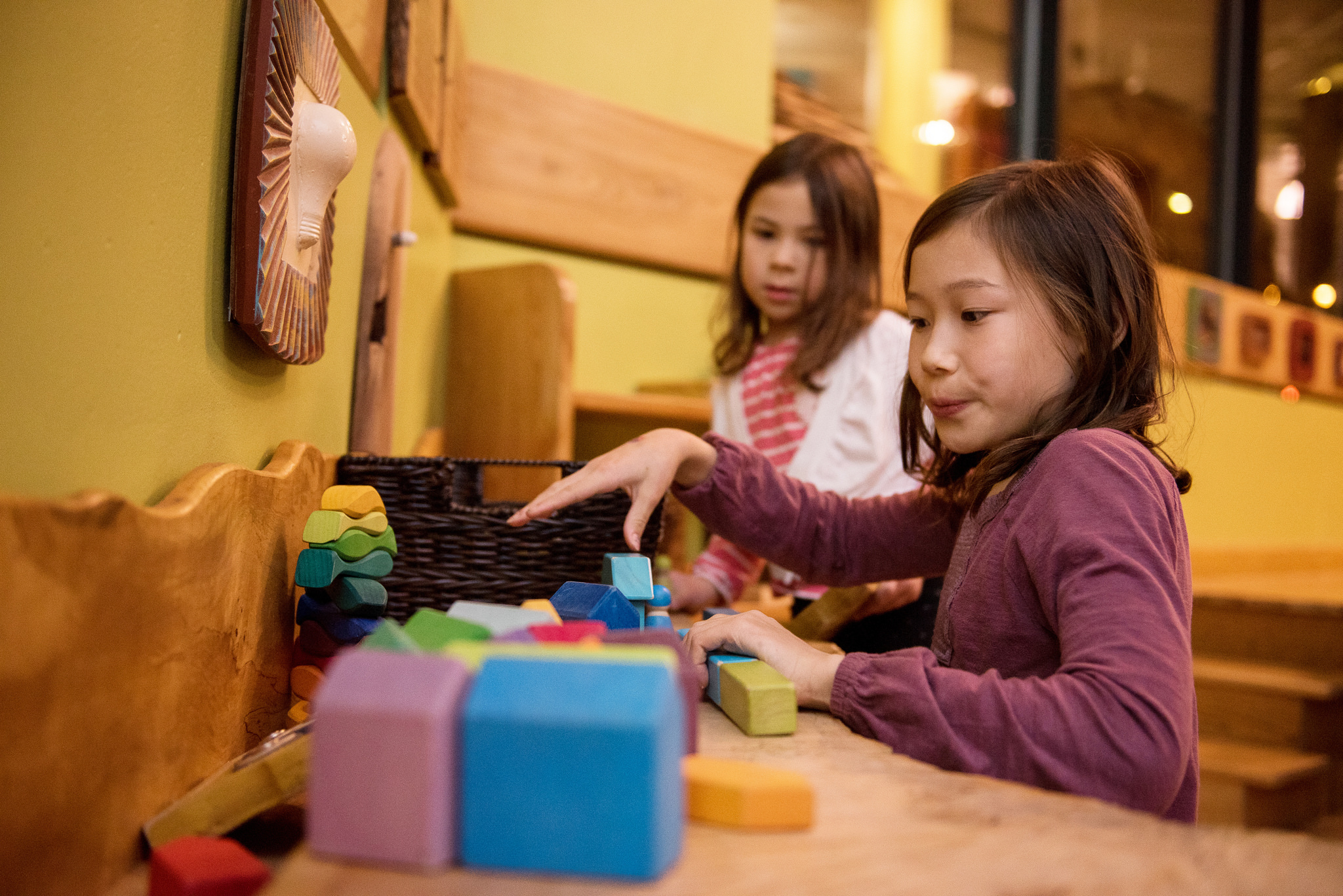
    Kids benefit when they self-guide their play, using toys and spaces that are open-ended, like the environments created by Madison Children’s Museum exhibits. Here, two girls play with brightly colored blocks in the museum’s Wildernest exhibit.


    Experts agree, children get an extraordinary number of benefits from unstructured play—playtime that they define, rather than letting a coach, teacher, game designer, or product marketer tell them how to do it. Play promotes creativity, builds motor skills, and helps kids work through their fears and stress. There is a strong correlation between unstructured play and executive function skills. And executive function skills are what kids need to succeed in school (I will listen to the teacher, even though I can see other kids playing out the window), as they grow (I will obey my curfew, even though my friends still want to hang out), and as adults (I will make myself nutritious food, even though I could eat Apple Jacks and Doritos for three meals a day and no one would stop me.)

    Yet so much of what fills our kids’ hours, particularly during the school year, is highly structured. Kids go from school days where recess is often squeezed out to make way for more instruction time and then participate in a parade of beneficial but highly structured activities: music lessons, sports, clubs, scouting, etc.

    A recent New York Times article, titled “Let Kids Play” explains it well:

    “We’re in a climate where parents are feeling like they need to schedule every minute of structured time, and 30 percent of kindergartens offer no recess,” said Dr. Michael Yogman, chairman of the A.A.P. committee on psychosocial aspects of child family health and the lead author of the statement. To some, he said, “play is seen as irrelevant and old-fashioned.”

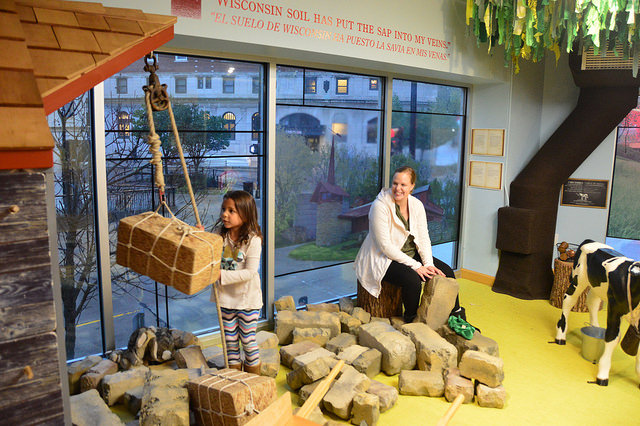
    Madison Children’s Museum is built with unstructured play in mind. Every one of our exhibit areas—from the Wildernest little-kids area, through Coops to Cathedrals on the second floor, and up on the rooftop—offers kids an environment that inspires play without telling them how to go about it. For example, there are building blocks in the farm section of Coops to Cathedrals, but no guidelines as to what should be built. The result is that on any day you could find kids constructing a block house for the model calf, a wall across half the exhibit, a long parade of blocks winding across the floor, or tall skyscrapers reshaping the view out the window. Similarly, the climbing equipment on the roof is sometimes a unicorn-populated castle in a forest, and other times a rocket ship, or a cage to contain a dragon—depending on the imagination of the children who happen upon it.
    41745721225_12845160e6_k

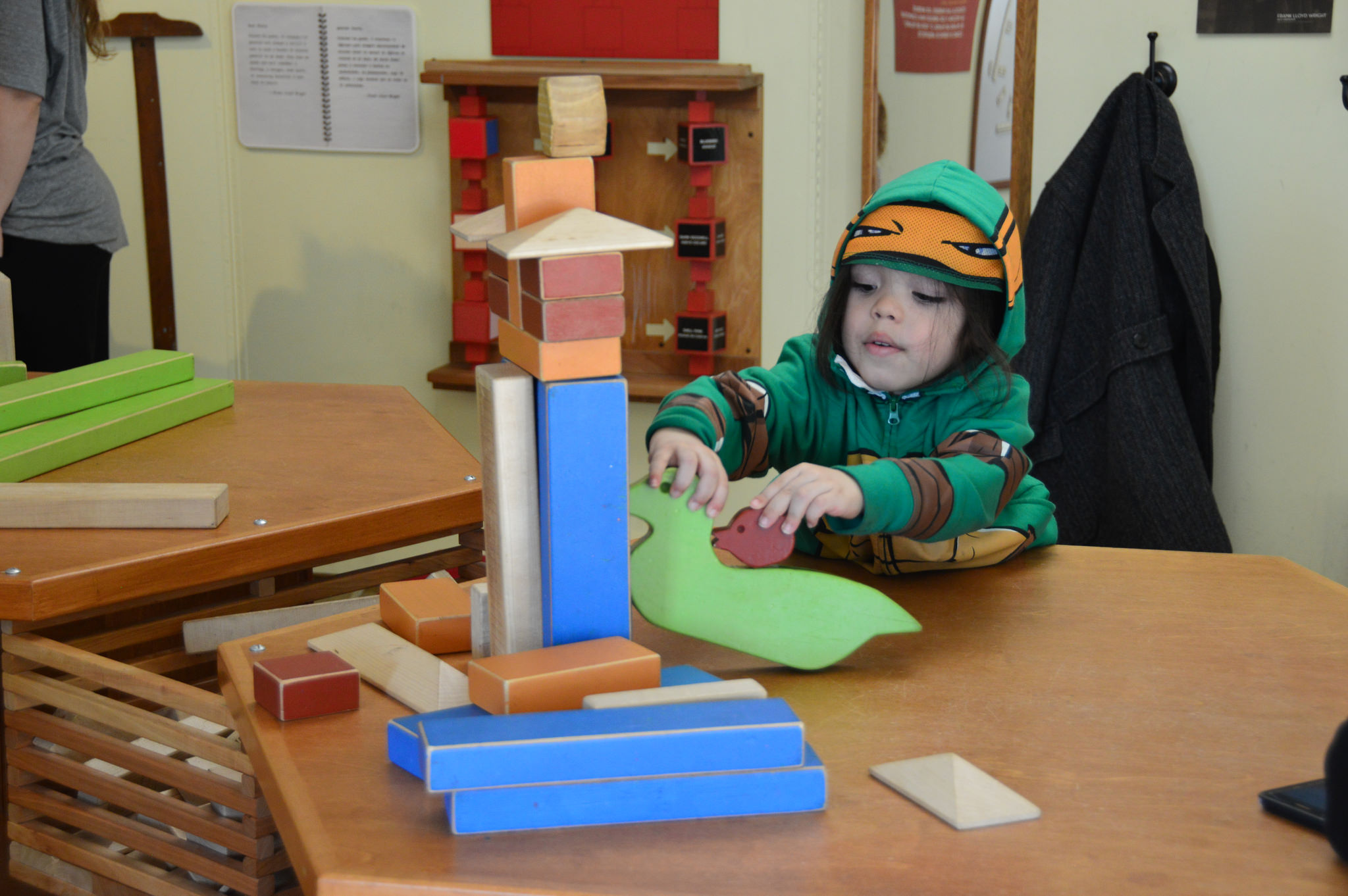
    A child plays with evocatively shaped blocks in the museum’s Coops to Cathedrals exhibit.

    None of this is an accident. In the grand Madison tradition of “think locally” our exhibits aren’t purchased piecemeal from elsewhere; they’re built by local artisans and artists on staff, in consultation with our staff and board experts on child development. We recognize the benefits of unstructured play and build our exhibits accordingly, providing tools and toys that can be used a myriad of open-ended ways, and with a minimum of instruction by staff or signs.

    Sometimes it takes kids, but more often their parents, a little while to break out of the mindset of structured play. Our discovery guides, who help assist and tidy exhibit spaces during the day, regularly get asked how a particular portion of an exhibit “is supposed to work.” The answer is, generally, that it works, however, the child thinks it should work.

    Deb, our CEO, often talks about a study where children were given an unusual “novel” toy. The children, given no information as to what it did, found many different ways to play with it. The children who had an adult demonstrate a few, specific ways to operate the toy only played with it in that limited manner. Madison Children’s Museum takes these lessons to heart; the lack of directional signs in our exhibits is deliberate, to enable invention and creativity, and encourage parents to follow the lead of their children.
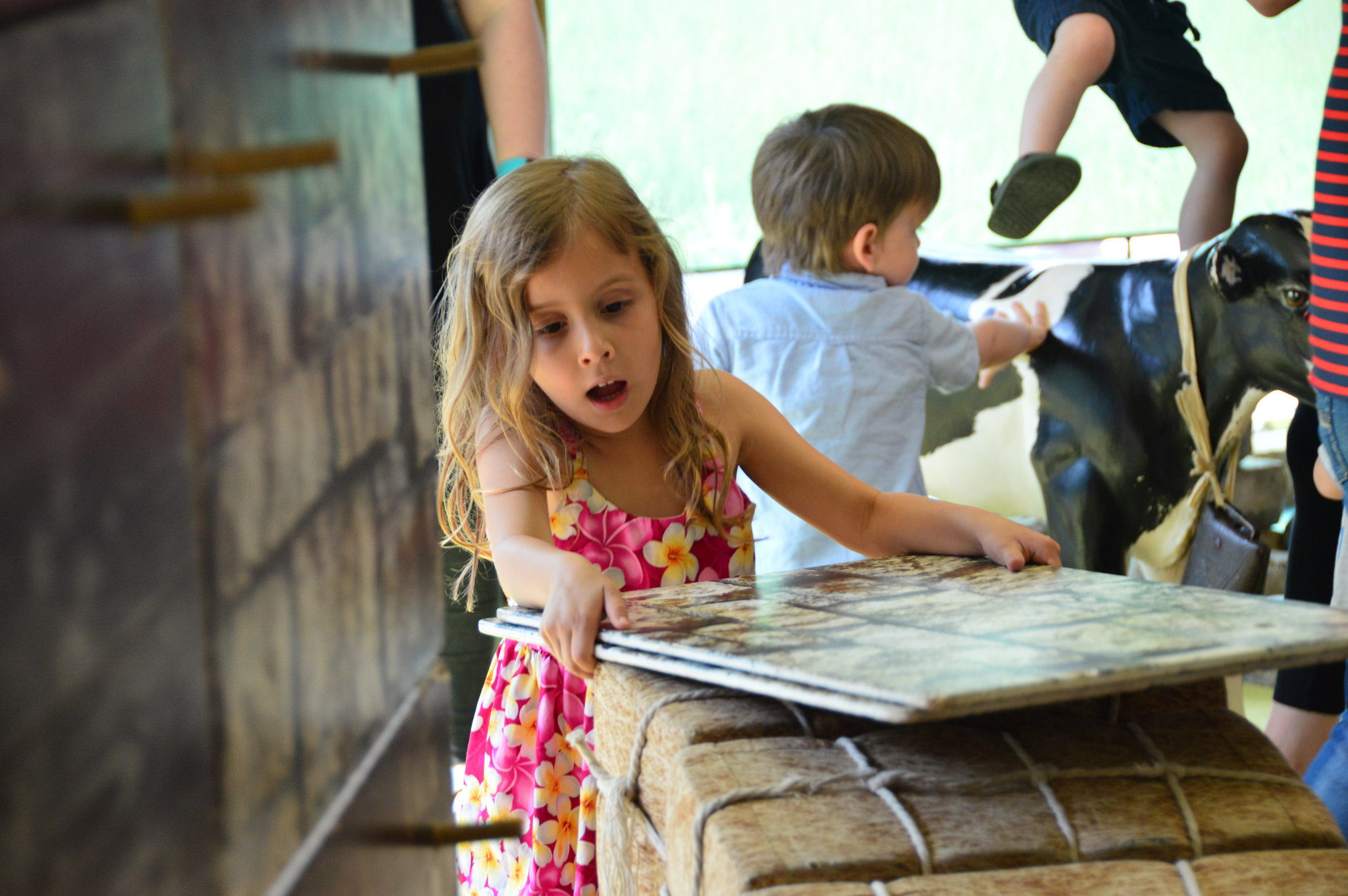
     

    42750395592_797ed7e67e_k (1)

    A girl assembles large panels in the farmhouse section of Coops to Cathedrals. What she creates is up to her imagination.

    As your family returns to the rhythms of the school year, make unstructured playtime a priority. Provide your kids with toys that don’t suggest a narrative (generic, rather than established characters), let them play in a park with or without play equipment, and plan a visit to Madison Children’s Museum and let them lead the way on where and how they want to play.
  2. Learn From Nature

    Leave a Comment

    By Joyce Hemphill (Queen of Play)

    37497286391_302a7ab8ef_o

    My young neighbor was telling me about a nature walk she took with her mom. They set out looking for ‘signs of spring.’ They came across plenty of birds, specifically robins, and saw a wide array of flowers. One flower stood out. She couldn’t remember the name, but it was small and purple, with leaves that looked like hearts. Her brother chimed in, saying “We also saw a bright yellow flower on a long stem, and it was round and had lots of small leaves that looked like a row of triangles. Can you guess what flower we saw?”

    Isn’t nature amazing with all of its colors, shapes, textures, patterns, smells, and sounds? Nature merges the classroom and the playground, expanding the possibilities for open-ended play in an environment that encourages creativity. Go outside and take a look. Nature provides a perfect resource for playing scavenger games. These games are simple and effective learning activities that engage children with the natural world while helping develop observational, analytical, and memory skills that carry over to the classroom. For example, while at the park or on a walk in your neighborhood do a “Where’s ROY G BIV?” search and be on the lookout for any Red, Orange, Yellow, Green, Blue, Indigo, and Violet.

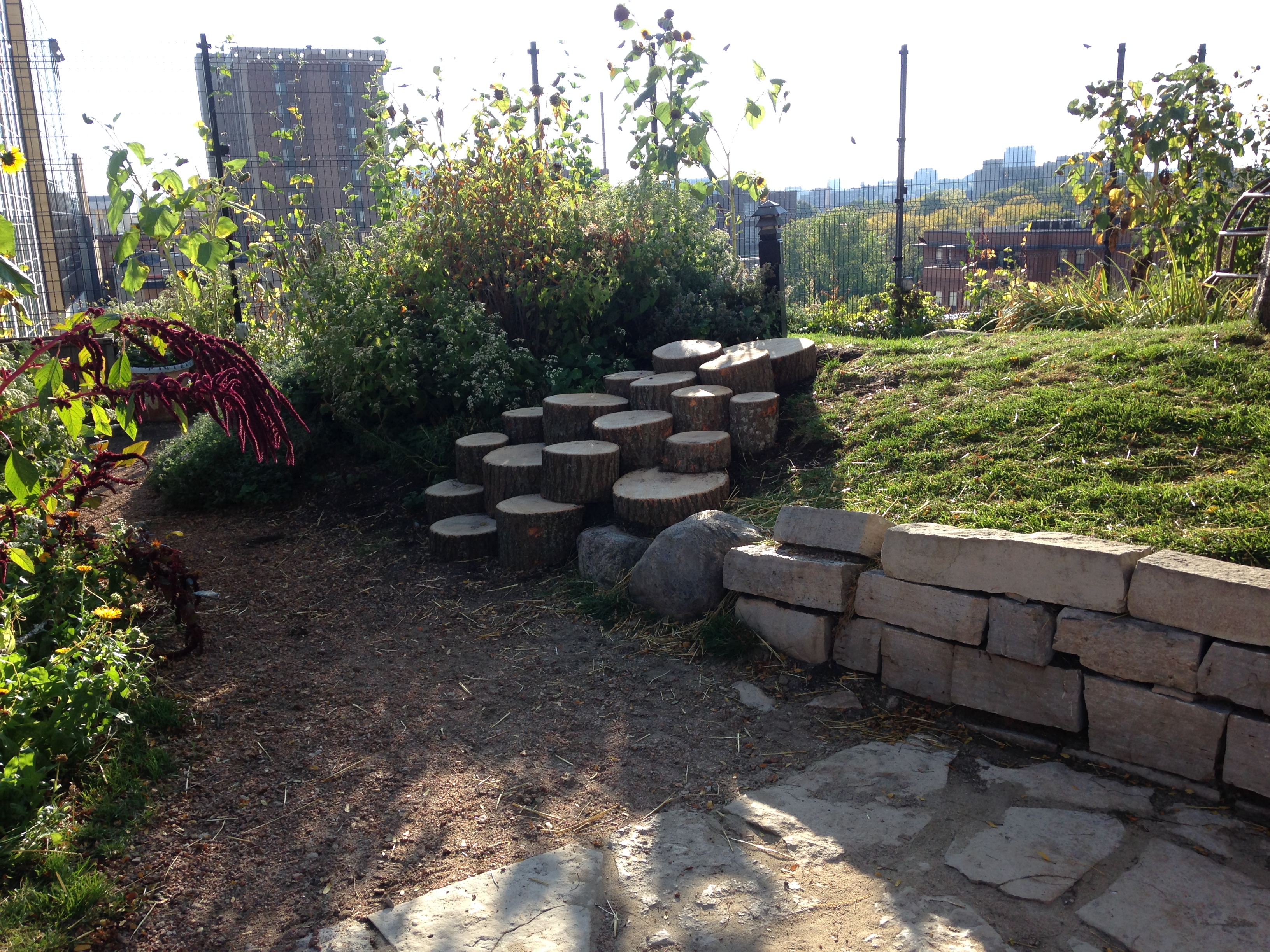
    Nature-based scavenger games can also be played in the outdoor spaces at the Madison Children’s Museum. Check out the Rooftop Ramble, Urb Garden, and Wildernest for examples of naturally occurring squares, circles, triangles, and other geometric shapes. Look for examples of symmetry and asymmetry in the various plants and animals you come across. Take a more focused look at spaces you have played in before and perhaps you will see something in a new way.

    Wisconsin native and celebrated architect, Frank Lloyd Wright, encouraged his students to not only study nature, but to fall in love with its wonders and beauty. Nature was Wright’s mentor, and its influence shines through in his work. The patterns and shapes in his designs echo the natural beauty of the outdoors

    The museum’s Frank Lloyd Wright inspired From Coops to Cathedrals exhibit will expand your options for play, including nature-based scavenger games. Not only can you do a search for ROY G BIV and scavenge for shapes, you can test your identification skills by matching the patterns you see inside the museum with those in nature.

    24270075118_eb68c82ece_z

    I encourage you to become a student of nature. Explore, investigate, compare, contrast, wonder, snoop, seek, and find.

    (YiP) Yours in Play

    Joyce

    BTW, did you figure out what flowers my neighbors saw? Answer: Wild violets and dandelions.

  3. Celebrating our Youngest Visitors

    Leave a Comment

    week-of-young-child-madison-childrens-museum
    As part of the national Week of the Young Child, celebrated across the country, we would like to honor young children and all those who make a difference in children’s lives. Week of the Young Child is an excellent opportunity for early childhood programs including child care and Head Start programs, preschools and elementary schools, to hold activities to bring awareness to the needs of young children.

    All young children need and deserve high-quality learning experiences that will prepare them for life, and as a children’s museum, we believe (and studies agree) that one of the best ways a child can learn, is through play.

    We ask you to come together to celebrate children wherever you may be, from April 12 to 18. Here at Madison Children’s Museum, we present a week of special activities – all free with admission – for our youngest visitors. These programs will help young children learn, play and grow in an fun environment created just for them!

    Singing for Literacy
    Tuesday, April 14, 11 – 11:30 a.m.
    Join local singer Bernie Schlafke and members of the string band Hoot ‘n Annie for a program of popular songs he performs and teaches in daycares to enhance early language acquisition. Tap your toes, dance and sing along to favorites in English and Spanish.

    Parachute Party
    Wednesday, April 15, 11 – 11:30 a.m.
    Celebrate play with our colorful, 25-foot parachute! Join in a variety of games suitable for young children. (Weather permitting).

    Early Childhood Professionals Training
    Wednesday, April 15, 6 – 8 p.m.
    Join fellow early childhood professionals for a night at the museum. Learn about WECA Advocacy, Satellite FCC and what MCM have to offer the community. Enjoy door prizes, refreshments and crafts!
    *Adults only; museum will be closed to the public during this event

    Visiting Rooftop Animals
    Thursday, April 16, 10 – 11 a.m.
    Our favorite Rooftop friends are taking a trip down to the Wildernest! Meet with and learn about chickens, snakes and more in a comfortable indoor setting.

    Story Time with Middleton Public Library
    Friday, April 17, 10:30 – 11:30 a.m.
    Cozy up for story time with our friends from the Middleton Public Library. Enjoy a reading from 10 – 10:30 and a special art project from 11 – 11:30.

    Giant Bubbles
    Saturday, April 18, 11 a.m. – 1 p.m.
    Explore the different properties of water, soap and bubbles in our Funkyard. Plus, learn how to – and try your hand at creating GIANT bubbles!

    See our calendar for a full listing of programming.

  4. The Next Generation of Chefs and Journalists Talk Edible Bugs

    Leave a Comment
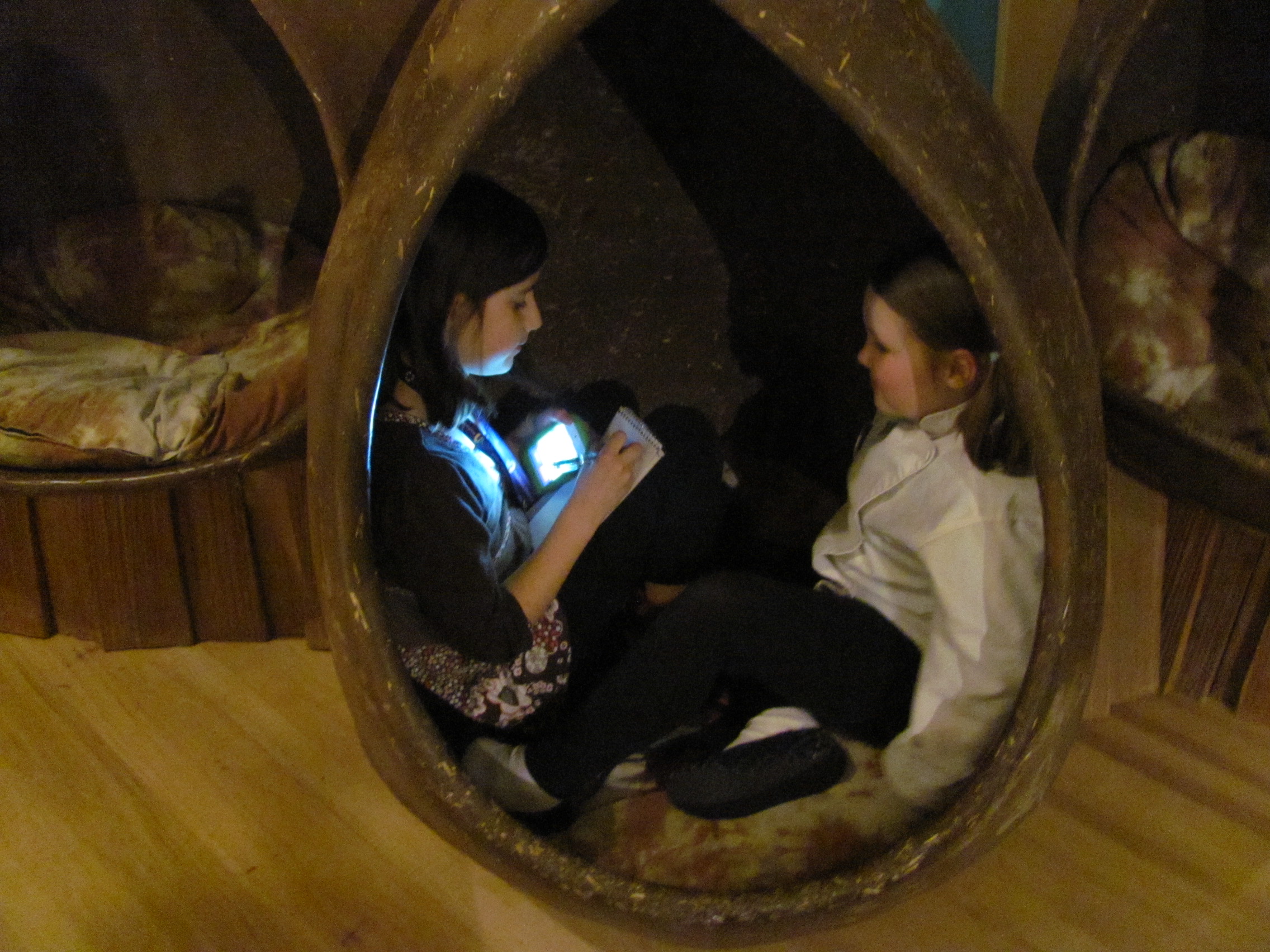
    Anika interviews Liliana in a "pod" in the Wildernest

    Anika Derby interviews Liliana Heide at the Edible Insect Banquet, part of Adult Swim: Sustainability Sideshow (3/6/15), held at Madison Children’s Museum to benefit the museum and Sustain Dane.

    At the recent Adult Swim: Sustainability Sideshow, Wisconsin State Journal reporter Samara Kalk Derby arranged to attend the event so that she could interview Chef David Heide of Liliana’s about his work on the Edible Insect Banquet. That dinner, with multiple seatings, has become the centerpiece of the annual benefit event.  Afterward, Samara wrote a great “Around Town” piece called Insects, They’re What’s for Dinner Now.

    Now, technically, we don’t allow kids at Adult Swim events. This is the time we clear the museum for the adults to play while enjoying a few adult beverages, if they choose. But Samara needed to bring her 9-year-old daughter, Anika. And Chef Dave brought his 8-year-old daughter, Liliana (namesake of the family restaurant), to help prepare and serve. Liliana was clearly there to work, sporting a smart chef’s coat. We gave Anika a press badge, just like her mom’s, to make it clear she was there in an official capacity.

    It was pretty clear what needed to happen next. While Samara interviewed Chef Dave, Anika interviewed Liliana. That interview follows.


    Interview with Liliana Heide

    By Anika Kalk Derby, exclusive for the Madison Children’s Museum blog

    I interviewed 8-year-old Liliana at the Edible Insect Banquet held at the Madison Children’s Museum.

    Liliana had mixed feelings about coming, wondering if her Dad, Dave Heide, who was asked to cook food for the banquet was going to prepare whole bugs. But Liliana informed me that the crickets were in a powder. “I think that eating insects is a lot better of an idea than eating regular meat because if you think about it, a bug actually only needs a little bit of food to keep it alive while a cow needs to drink a bathtub of water a day to keep it alive and edible.”

    Liliana told me “I say this because less goes to waste when eating insects and cows are so big and only a little bit of it is used when making meat products, plus there are only so many cows.”

    Well, there are a lot of cows in Wisconsin.

    So overall I thought that Liliana showed a lot of knowledge about the topic and was open minded to the idea of insects being a new food option.

    Anika Kalk Derby is the daughter of Samara Kalk Derby and Jamie Derby. She is a fourth-grader at Lowell Elementary School on Madison’s East Side who enjoys rock climbing, skateboarding, swimming, biking, basketball, Z104, playing piano, drawing and learning Hebrew.

  5. Living Laboratory: Real-World Research at Madison Children’s Museum

    Leave a Comment

    If you’ve been in our Wildernest exhibit area for early learners lately, you may have noticed some child development studies taking place in the Cozy Cottage. We recently began participating in the Living Laboratory project, a unique educational on-site research program designed in collaboration with the Boston Museum of Science, the National Science Foundation and researchers from the University of Wisconsin Waisman Center. (more…)